All I Wanted Music Video - Draft
Below is the first draft of my music video. The draft is incomplete, but it is a basis to work by and to tweak as I complete the project. My next draft shall be complete and the upload after that will be my final product.

Shooting Plans
Unfortunately, I have had some issues contacting and organising dates with Rubix, my location, due to absences and a breakdown in communication. To resolve this, I decided the best tactic would be to visit the Manager during trade hours to ascertain a date that I could use the location for the remainder of my time. Upon visiting the Manager, it became clear he had agreed a date for me to use the location with a subordinate which hadn't been relayed yet, which meant there was little difficulty securing the date.
Concurrently, it was necessary to organise a second video shoot for the scenes that are not set in the night club, which was much easier to do as the location is my own home. This shoot will take place first, so that the final shoot will be in the night club and all of my footage will be complete.
Finally, I completed a shoot for the opening scene of my production the other day where I used my Dad, who featured in my AS production. After the shoot in Rubix, hopefully all of my raw footage should be available and I can complete the production.
Concurrently, it was necessary to organise a second video shoot for the scenes that are not set in the night club, which was much easier to do as the location is my own home. This shoot will take place first, so that the final shoot will be in the night club and all of my footage will be complete.
Finally, I completed a shoot for the opening scene of my production the other day where I used my Dad, who featured in my AS production. After the shoot in Rubix, hopefully all of my raw footage should be available and I can complete the production.
Paper Elements
The next stage of ancillary design was compiling textures to use in them. To do this, I made my own so that the textures were exactly how I wanted them and, to another vein, free. I placed the paper on a purple background so that the background could be more easily removed to reveal the alpha channel.


 When keying out the background, it is extremely important to keep a uniform colour across the frame so that the tolerance needs to be a low as possible. To achieve a better result, I used extra lighting other than my flash to cover the page. The piece at the top of the page is for the navigation bar at the header of the website, where the central piece is a love heart that, when scrolled, will align as one piece and then scroll away from each other as the user moves on. The other pieces are select tears that I wish to use throughout the site or on the digipak. The final sheet with a single piece is for the About section on my website where it will serve as the background.
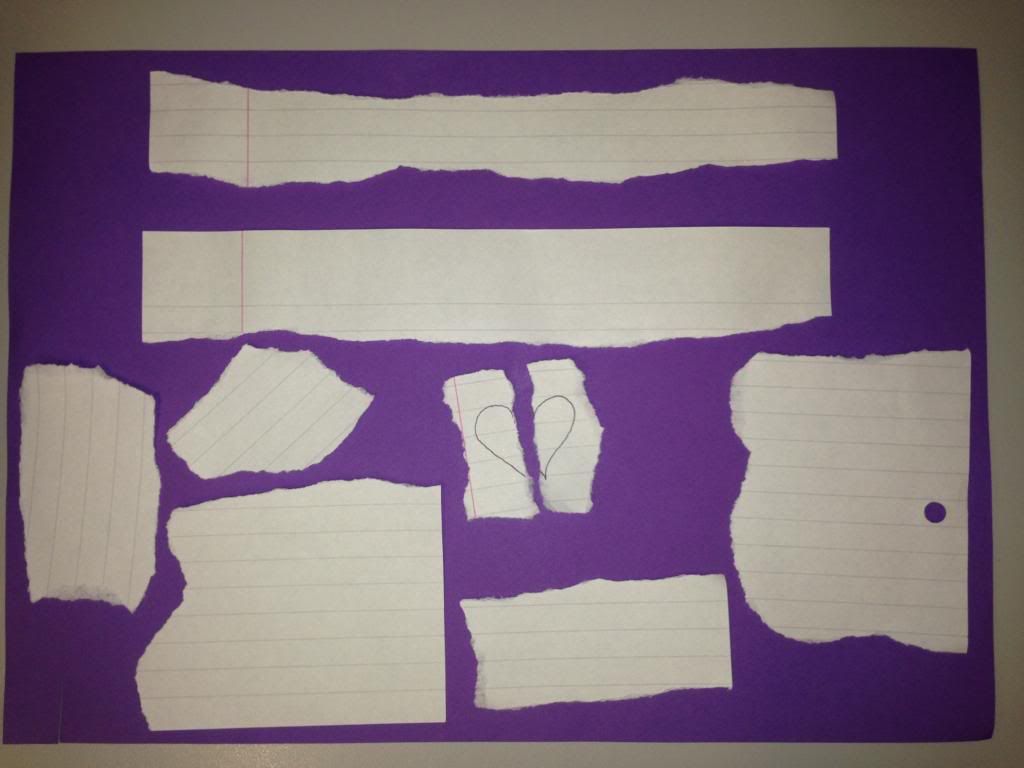
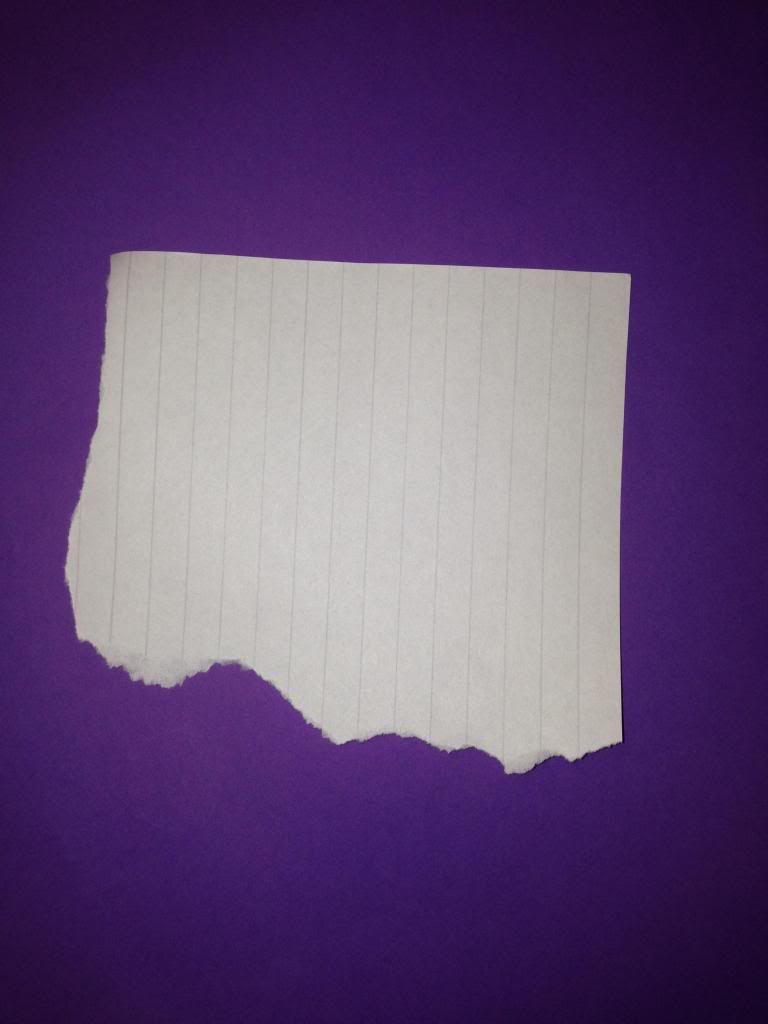
 When keying out the background, it is extremely important to keep a uniform colour across the frame so that the tolerance needs to be a low as possible. To achieve a better result, I used extra lighting other than my flash to cover the page. The piece at the top of the page is for the navigation bar at the header of the website, where the central piece is a love heart that, when scrolled, will align as one piece and then scroll away from each other as the user moves on. The other pieces are select tears that I wish to use throughout the site or on the digipak. The final sheet with a single piece is for the About section on my website where it will serve as the background.
Artist Logo
An important element of my ancillary tasks - and my main task should I choose to include it - is the artist logo. This reveals the identity of the artist and, in most cases, becomes the one image a fan or even anyone can look at and immediately know the artist.
Logos vary immensely; I carried out a small amount of research before beginning the task, but only to grasp an idea of what has been done as it is important that they remain original. I then began mocking designs, playing with the artists name, Daniel Lewandowski, to find a structure for his name:


 After this, I worked on my first draft. This design involved a crumpled piece of paper - in-keeping with my website - that the text was formed to. To achieve this result, I used a displacement map in photoshop. This involved altering the contrast and brightness of the background image to make the contours much more obvious. The map is then applied to the text which then forms itself to the paper and appears to be written on it. This process created:

 The second design involved the inclusion of a Polaroid picture background with a signature caption for a bit more personality as the first design wasn't overly complex or revealing of the artist/brand. The font I used was Jellyka Saint Andrews Queen as it caught my eye as a very detailed, personal font that could be mistaken as true handwriting, which is rare. Utilising the way the font alters characters to drawn images, I added some extra characters for decoration:


 I really like this logo as it feels like it contains all of the elements I wanted and serves as a memorable brand identity. Finally, I put the logos up for a vote amongst my peers to ascertain which was the best when my audience was concerned. Luckily, the final logo reined as champion and I agreed with my demographic. This design, therefore, will be the logo I will use in my tasks.
Logos vary immensely; I carried out a small amount of research before beginning the task, but only to grasp an idea of what has been done as it is important that they remain original. I then began mocking designs, playing with the artists name, Daniel Lewandowski, to find a structure for his name:
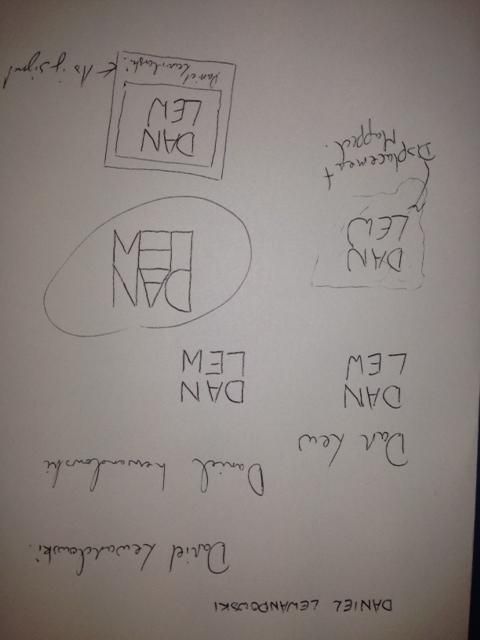
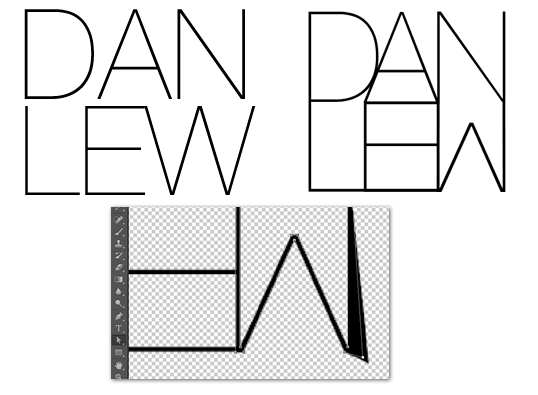
Once I had done this initial planning, I moved on to experimenting in Photoshop. I had already formed the idea of what I wanted to create so it was up to following my plans from here. The most important element of all of my designs was the specific way in which I designed the lettering so the first port of call was to create that. My favourite, san-serif font is Helvetica and the slightest version of this is Helvetica Neue Ultralight so that was the end choice. The font needed a fair bit of editing, however, so I converted the letters to paths in photoshop and reshaped them until they resembled what I wanted. The image to the left is the original font where the right image is the final result:
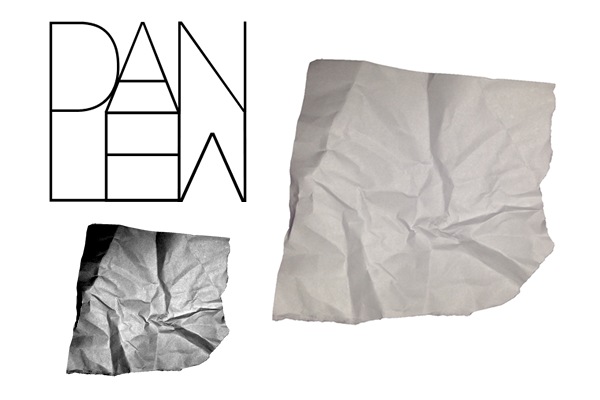 After this, I worked on my first draft. This design involved a crumpled piece of paper - in-keeping with my website - that the text was formed to. To achieve this result, I used a displacement map in photoshop. This involved altering the contrast and brightness of the background image to make the contours much more obvious. The map is then applied to the text which then forms itself to the paper and appears to be written on it. This process created: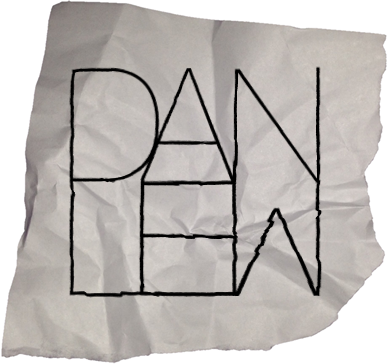
Logo 1
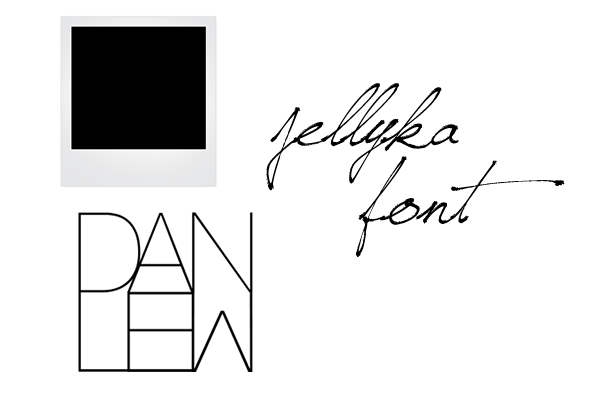 The second design involved the inclusion of a Polaroid picture background with a signature caption for a bit more personality as the first design wasn't overly complex or revealing of the artist/brand. The font I used was Jellyka Saint Andrews Queen as it caught my eye as a very detailed, personal font that could be mistaken as true handwriting, which is rare. Utilising the way the font alters characters to drawn images, I added some extra characters for decoration: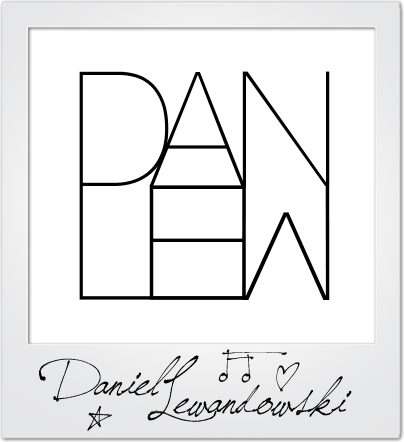
Logo 2
The design didn't look quite right to me and I even asked for feedback too, which a final idea flourished. I offered up the idea of a background image that was slightly blurred so as not to take away from the logo, but add colour and more of a persona. The logo then became:
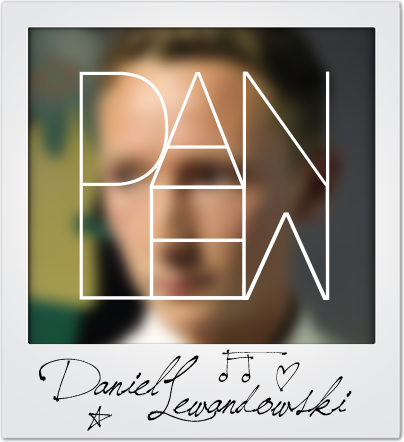
Logo 3
 I really like this logo as it feels like it contains all of the elements I wanted and serves as a memorable brand identity. Finally, I put the logos up for a vote amongst my peers to ascertain which was the best when my audience was concerned. Luckily, the final logo reined as champion and I agreed with my demographic. This design, therefore, will be the logo I will use in my tasks.
Website Plan
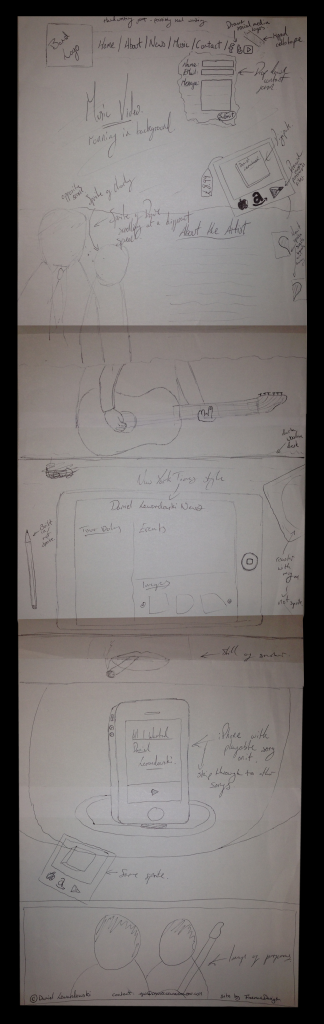
Due to the complexity of my ideas, it was important to have a fully fledged website plan before I began work on compiling it. This needed to be drawn by hand as it offers the most versatility when considering ideas and trying out options. The finished design is below and I shall be working closely to it in the final site:

Ancillary Task Research - Website Home Page
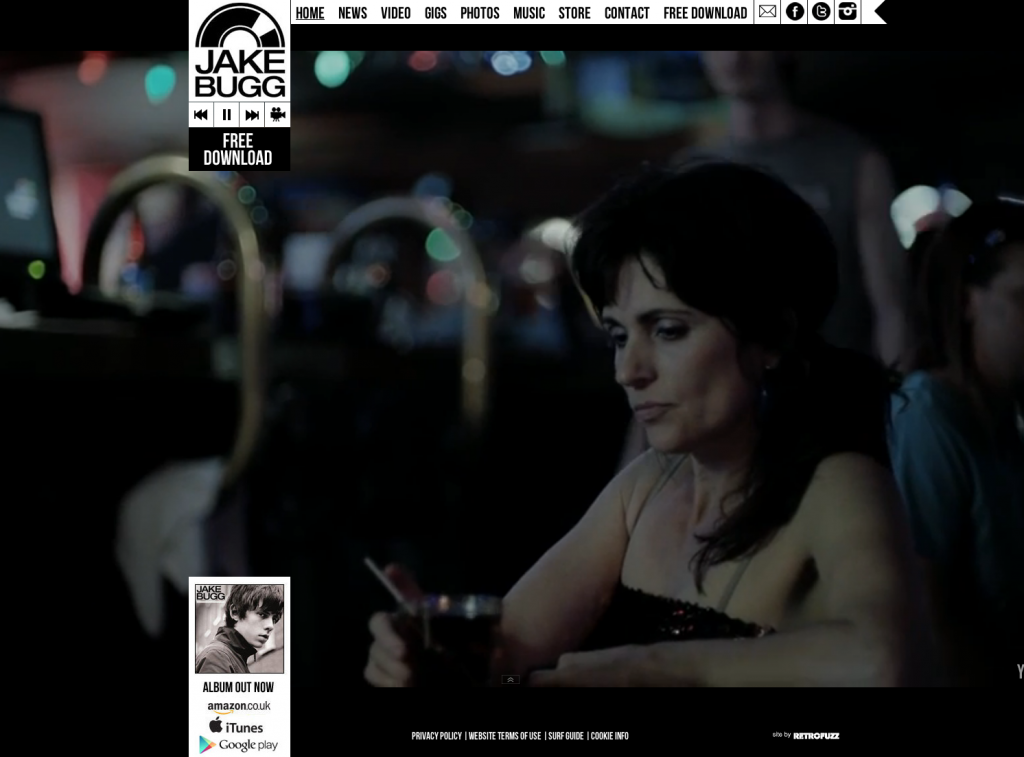
Concurrent with my Digipak research, I am carrying out research into Artist websites so that I can create a website conventional to these. After a little research, however, I wasn't incredibly impressed with a great number of the designs so I am also carrying out research into other websites to take inspiration from and form ideas to merge with the band's website. A feature I really liked, however, from Jake Bugg's website is the rolling video background which includes all of his music videos and some promotional films. This means the user can navigate his site while experiencing his content, creating an incredibly effective promotional site. I will most probably be using the HTML5 code here for this feature:
As there isn't much content on the first page, though, I plan to merge this idea with the current structure of the Spotify website where images and backgrounds scroll and differing speeds which heightens interactivity and makes information transfer more efficient:
 |
| www.JakeBugg.com |
After some further research, I found that the effect seen above is known as the Parallax Scrolling effect and can be achieved a number of different ways. As this is definitely my favoured idea, I have looked into certain source code and tutorials for creation; one of which, I found at www.GitHub.com and offers all of the code needed for including videos, backgrounds, sprites and text which covers everything I would need. This idea allows for a great deal of band promotion as images feature very heavily. I can take a number of photographs on our shoots to satisfy this.
Another artist site that I think looks appealing is Tom Milsom's. The main feature that makes similar web pages lose appeal seems to be the over saturation of tour dates and the lack of organisation with these. Milsom's page isn't like this, but Like Bugg's has little content so any inspiration taken would have to be combined with others. The photography is very nice, however, so I can draw from this:
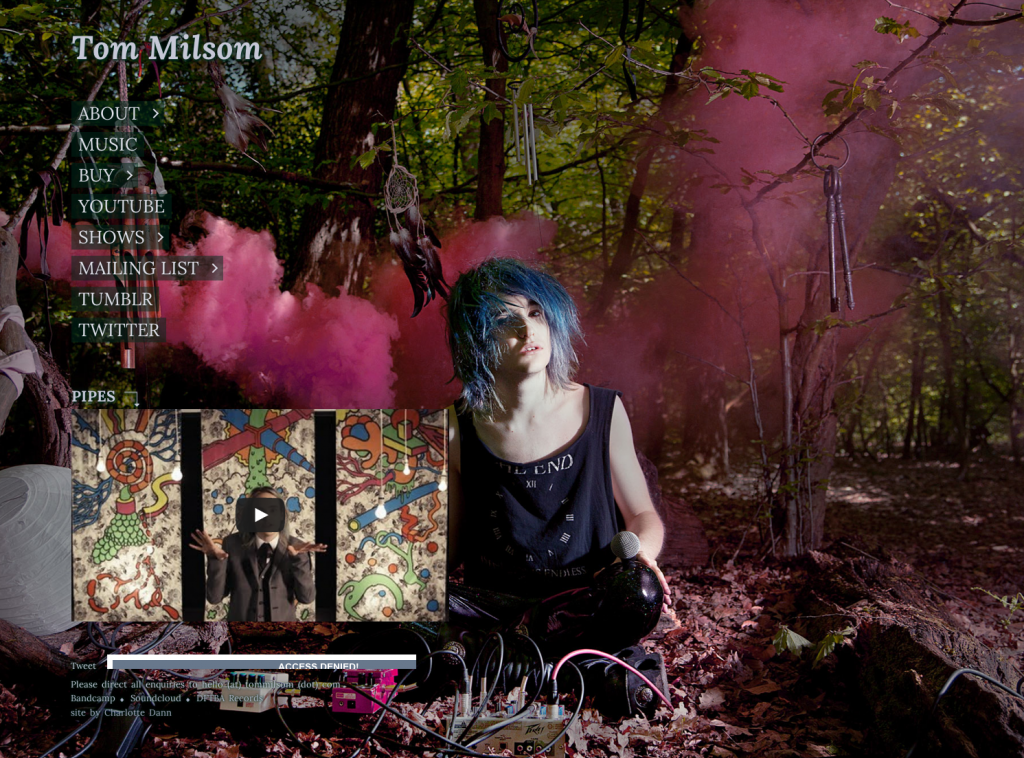 |
www.TomMilsom.com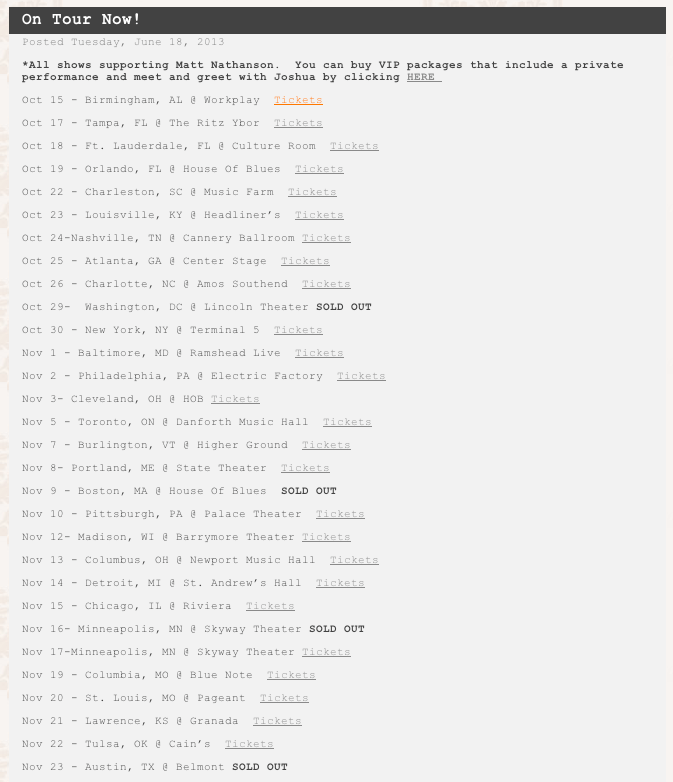 In addition, I want to create a raw theme by including elements such as ripped paper backgrounds to lay titles over which I would create myself as quality stock photos of this are rare:  |
Ancillary Task Research - Digipak
As part of my end project, I am to create an accompanying Digipak and Webpage as ancillary tasks. The first I shall be working on is the Digipak, though before designing a concept for my own, I would like to look into preexisting Digipaks to replicate the conventions and to create a successful design that looks professional and legitimate. Below, therefore, I will be including a number of album artworks and Digipaks with analysis:

 I really like the Tom Odell - Long Way Down album as it's simple and incorporates the widely used, but little perfected white on a light photograph, while still visible. The image is the entire album cover, however, which would be illfitted for the project due to the lack of skill showcasing. The depth of field is particularly effective with the focus purely on the model which looks very nice. This, I could incorporate in my final product as it's very minimalist, but technical.

The back cover is quite contrapuntal to the front; where the front has a soft focus depth of field, the back is more gritty though I like this. There is a synergy between the two covers with the second use of the model. Though his features aren't visible, his clothing is recognisable and forms a link between the two. The track list uses the same bold font, which is quite effective.
 This is an alternative Tom Odell cover for an EP, but I feel it's very effective and shows a great deal of photographic skill and editing. The san serif, blocky typography seems quite conventional of this style of music so that could be something to think about. I like the fish eye lens use, but it would be very iconic of this album cover if I were to do the same.


 The self-titled, Jake Bugg album is again very simple, but in my opinion it looks very nice. The raised contrast and desaturation shows a competence with graphic manipulation, but photography clearly shows the decision making process undergone. The model is arched forward, which leaves sufficient space for the title behind his head. The cropping also slightly takes the edge off of his hair line which is obviously intentional, it shows how the record challenges uniformity and polish.
Very much like the Tom Odell artwork, this cover reuses the model in the same clothing to create synergy. The perspective created by the street is very nice and connotes such things as journeying and moving on which seems to be the mantra of the album.

Edd Plant's Confidence Tricks skillfully shows how an image can be removed from the background and the backdrop can be manipulated. Having rendered clouds, the producer has introduced some interesting flourishes in red and black which connote playing cards and therefore back up the album's title. Card names such as the Ace of Hearts also feature which furthers this. The choice of props and clothing is also in keeping. The font, however, is quite common and therefore doesn't look as great as it could. I may take inspiration from this cover, but the font will be considered deeply and I will ensure to not use a famous, common one.


 This album is particularly good because it showcases an extremely good set of editing skills. The photograph has been manipulated such that it now resembles a cartoon wth only two tones (for half of he image). The, then, introduction of a red pop art style gradient, really makes the art work pop out which would be the producer's intention. Logo wise, the incorporation of both names as one looks very nice and will clearly be memorable. The back cover continues the pop art style which I think looks really nice and achieves a great look while not overly difficult to reproduce. Again, the font is san serif and, in this case, entirely capitalised which is bold and iconic of the punky genre. The convention holds for more than punk, however, evidenced by the previous two album arts. The disc, which seems to be the same for most, merely continues the theme in terms of colour and logos or is fairly bare and quite minimalistic, such as the Jake Bugg disc.
 Erase This by Alan Lastufka and Luke Conard is one of my favourite album covers. The abstract nature of the record really shines through with the paper design and title orientation. I am a real fan of the model being removed from their original background such as this and Confidence Tricks; I just need to be aware that making the image then look really nice will need some working. I also like the raw style overlay that has been used to merge the model with her background which is something I may attempt to use.

- The thematic design shows that digipaks must be a cohesive product where the designs of each face follow through the end result.
- The printing on the disk is similar to an image on another face which increases the cohesion.
- Minimalist design with a nicely framed, simple image of the artist, accompanied by typography.
- Information on the inside cover
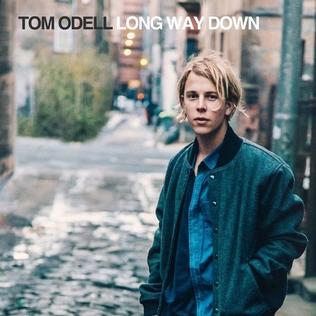 I really like the Tom Odell - Long Way Down album as it's simple and incorporates the widely used, but little perfected white on a light photograph, while still visible. The image is the entire album cover, however, which would be illfitted for the project due to the lack of skill showcasing. The depth of field is particularly effective with the focus purely on the model which looks very nice. This, I could incorporate in my final product as it's very minimalist, but technical.
The back cover is quite contrapuntal to the front; where the front has a soft focus depth of field, the back is more gritty though I like this. There is a synergy between the two covers with the second use of the model. Though his features aren't visible, his clothing is recognisable and forms a link between the two. The track list uses the same bold font, which is quite effective.


Very much like the Tom Odell artwork, this cover reuses the model in the same clothing to create synergy. The perspective created by the street is very nice and connotes such things as journeying and moving on which seems to be the mantra of the album.
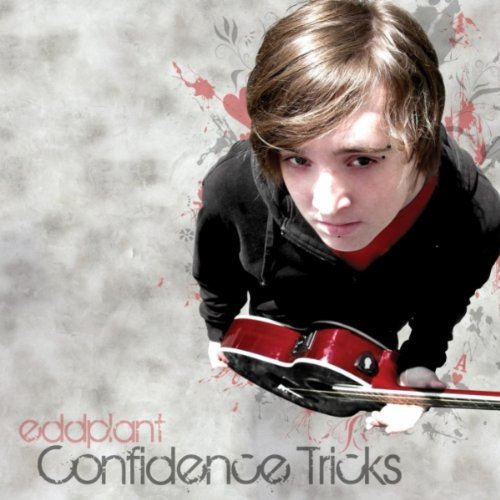
Edd Plant's Confidence Tricks skillfully shows how an image can be removed from the background and the backdrop can be manipulated. Having rendered clouds, the producer has introduced some interesting flourishes in red and black which connote playing cards and therefore back up the album's title. Card names such as the Ace of Hearts also feature which furthers this. The choice of props and clothing is also in keeping. The font, however, is quite common and therefore doesn't look as great as it could. I may take inspiration from this cover, but the font will be considered deeply and I will ensure to not use a famous, common one.


 This album is particularly good because it showcases an extremely good set of editing skills. The photograph has been manipulated such that it now resembles a cartoon wth only two tones (for half of he image). The, then, introduction of a red pop art style gradient, really makes the art work pop out which would be the producer's intention. Logo wise, the incorporation of both names as one looks very nice and will clearly be memorable. The back cover continues the pop art style which I think looks really nice and achieves a great look while not overly difficult to reproduce. Again, the font is san serif and, in this case, entirely capitalised which is bold and iconic of the punky genre. The convention holds for more than punk, however, evidenced by the previous two album arts. The disc, which seems to be the same for most, merely continues the theme in terms of colour and logos or is fairly bare and quite minimalistic, such as the Jake Bugg disc.
Subscribe to:
Comments (Atom)