Showing posts with label Main Task. Show all posts
Showing posts with label Main Task. Show all posts
Edit Decisions
Instead of an edit decisions list as I made the Music Video, I decided it would be much more useful to wait until I had finished the video to detail every single editing technique and complex shot choice in the following document. I believe it sufficiently details the effort I put into my work:

All I Wanted Music Video - Final
After much refinement and further editing, I have completed my Music Video for Daniel Lewandowski's song, All I Wanted. I am very proud of the end result as it is a conglomeration of my editing skills and shot choice, put into five minutes. I opted for the flashback scenes to be in black and white, with some added glow, which was to the benefit as it is now much more understood by the audience members I have shown.
Theory Application: Dyer's Star theory
"A star is a construct of the industry it pertains to, not a real person." - Richard Dyer
This is the idea first proposed by Richard Dyer, the English Specialist who proposed ideas about cinema, though his concepts apply incredibly well to the ideas of Music videos. The majority of successful music videos feature a subject performing the song the video is for. A further internal majority of these use a famous or well-known subject to complete this function or at least act in the video.
Essentially, people are complex. They are the perfect choice for the producer who wants to form an emotional connection between character and audience, but they are very difficult for the producer who is designing for the mass market. By selecting a well known actor to not act, but appear in the video, they achieve that cross-media convergence through synergy that mutually benefits both industries.
This is extremely general, however, as this isn't always the case. The producer of 'I Want Love' by Elton John, for instance, created the perfect balance as his choice of actor is impeccable, bettering the overall effect. The examples above are the more successful uses of stars, but often they are simply included to raise the reputation of the video. To work this way, I deeply considered involving the original artist of my music video, but the logistics were incredibly difficult. The opening scene - now another actor smoking and walking away form the function hall - was originally planned to be acted by the artist where I would contact him and ask for him to film it. Directing from so far away, however, would have been difficult and the result would not have been my own.

 The theory further, predominantly applies to the exploitation of people to create images for the audience to enjoy or aspire to and ultimately dehumanises the subject. The main identifier for the occurrence of this is when artists become less-linked to their original medium. For example, Cheryl Cole started as a singer in a pop group and this was her identity. Quickly, however, she branched into other areas where she became a reality TV judge, product advertiser - needless to mention tabloid scandal. Her audience became more focused on her personal life and other exploits that music almost takes a side-line. This is, however, not at all to the detriment of her music career, but benefits her. Stars begin to profit from their status and audiences support their music not fir its quality, but their loyalty to them. This is so much more of a benefit to the industry as they have many stars to their disposal and can exploit them how they wish.
This is extremely general, however, as this isn't always the case. The producer of 'I Want Love' by Elton John, for instance, created the perfect balance as his choice of actor is impeccable, bettering the overall effect. The examples above are the more successful uses of stars, but often they are simply included to raise the reputation of the video. To work this way, I deeply considered involving the original artist of my music video, but the logistics were incredibly difficult. The opening scene - now another actor smoking and walking away form the function hall - was originally planned to be acted by the artist where I would contact him and ask for him to film it. Directing from so far away, however, would have been difficult and the result would not have been my own.

 The theory further, predominantly applies to the exploitation of people to create images for the audience to enjoy or aspire to and ultimately dehumanises the subject. The main identifier for the occurrence of this is when artists become less-linked to their original medium. For example, Cheryl Cole started as a singer in a pop group and this was her identity. Quickly, however, she branched into other areas where she became a reality TV judge, product advertiser - needless to mention tabloid scandal. Her audience became more focused on her personal life and other exploits that music almost takes a side-line. This is, however, not at all to the detriment of her music career, but benefits her. Stars begin to profit from their status and audiences support their music not fir its quality, but their loyalty to them. This is so much more of a benefit to the industry as they have many stars to their disposal and can exploit them how they wish.
All I Wanted Music Video - Draft
Below is the first draft of my music video. The draft is incomplete, but it is a basis to work by and to tweak as I complete the project. My next draft shall be complete and the upload after that will be my final product.
Shooting Plans
Unfortunately, I have had some issues contacting and organising dates with Rubix, my location, due to absences and a breakdown in communication. To resolve this, I decided the best tactic would be to visit the Manager during trade hours to ascertain a date that I could use the location for the remainder of my time. Upon visiting the Manager, it became clear he had agreed a date for me to use the location with a subordinate which hadn't been relayed yet, which meant there was little difficulty securing the date.
Concurrently, it was necessary to organise a second video shoot for the scenes that are not set in the night club, which was much easier to do as the location is my own home. This shoot will take place first, so that the final shoot will be in the night club and all of my footage will be complete.
Finally, I completed a shoot for the opening scene of my production the other day where I used my Dad, who featured in my AS production. After the shoot in Rubix, hopefully all of my raw footage should be available and I can complete the production.
Concurrently, it was necessary to organise a second video shoot for the scenes that are not set in the night club, which was much easier to do as the location is my own home. This shoot will take place first, so that the final shoot will be in the night club and all of my footage will be complete.
Finally, I completed a shoot for the opening scene of my production the other day where I used my Dad, who featured in my AS production. After the shoot in Rubix, hopefully all of my raw footage should be available and I can complete the production.
Green Screening and Rotoscoping
As part of my initial first video shoot, I incorporated a green screened shot which meant I could securely film my action without the shake or risk of being in a moving car. To embellish the chromakeyed area, I rotoscoped masks over the window behind the actress - having to form a mask around her facial features.
Due to the complex movements she made, tweening the keyframes was not 100% effective so I manually altered it for every frame of the 6 second clip which amassed to over 150 separate frames. The end result does look professional and I'm very proud of the effect it produces. After changing my actors, however, and after receiving feedback from peers, I have decided not to use green screen for the refilming of the scene or for subsequent shots. The process if very time consuming and I do believe the achieved result may not be worth the time it will take away from the projects schedule.
Actor Change
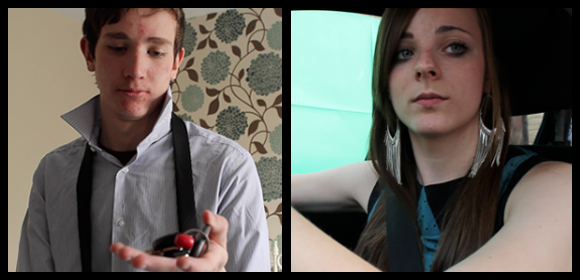
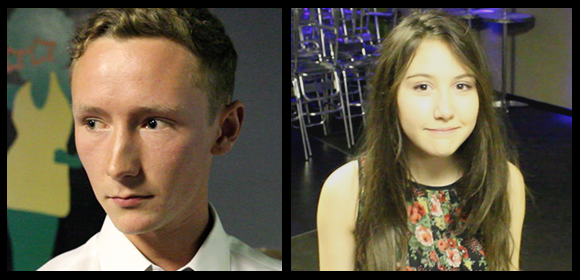
I have lost a small amount of footage due to this change, but my time has been saved in the long term and I don't begrudge having changed.
Song Tutorial
As part of my production, I needed to learn the song to perform it in the music video on the guitar. As I was working with an unsigned artist, I asked them if they could write the chords down for me to work out the rest of the song. Not expecting much more than this, I was surprised when Daniel Lewandowski (the artist) sent me an email with the following YouTube videos attached. In the videos, Daniel aimed to teach me step by step the exact way he plays the song which ultimately lead to me having a greater understanding of the song than I could ever have had with the mere chords or tablature.
Scheduling Difficulty
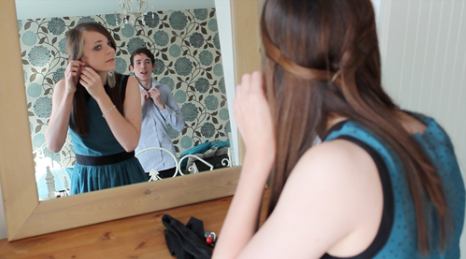 As I am working with a venue which can only offer me restricted times to film and actors, some with full time work commitments, it has been incredibly difficult to organise when I can film scenes. The first film shoot was only possible when it was completed due to surplus time during pre-booked holidays which were not especially for production. I have now secured an appointment to discuss suitable days to film, though I have been informed that the least busy periods are Mondays and Wednesdays in the day. This could be a potential problem as my female actor works 9 till 5 every day where my male actor begins work at 5 o'clock, which leaves no time for filming their joint scenes. I will have to enquire about other times where the room may be available for a short amount of time where I can film the shots that involve both actors. Luckily, the actor I need for most of the production, is available most of the day.
 Permission for Venue
 Concerning Café Con Leche, which I enquired about using as the venue for my Music Video, I have heard back from them and been granted permission to use the premises on a Monday or Wednesday afternoon; their least busy periods. I have also received permission from my teachers to use my lessons for filming in the venue, though I have decided that the best plan is to use my half term holidays; as my school operates a different system than most half terms so the venue will still be free and I will have the whole day to prepare and complete the filming without the need to go to school.
Audience Feedback on Initial Footage
After filming, I decided to ask some of my colleagues what they thought of the footage to receive some feedback on what I had done and what they felt I should do for future shots. Asking three colleagues and one of my teachers, I received a varied range of comments on my shots. Below are some of the screenshots I used in the initial footage recount with comments from them:

Shot 34

Colleague 3: "This shot works well and, having seen the edited footage already, it works really well, but I would advise you use green screen as little as possible from here on out because removing the undesired elements is a lot of work."
Teacher: "The movement is nice and smooth which utilises your dolly well."
Shot 34.5

Colleague 2: "Like Colleague 3 said, the green screen does still look good, but it is obviously a lot of work which could be avoided. If you were planning again, it may have been better to film with an actual background though steadiness is compromised."
Shot 37

Colleague 1: "I really like this shot, though the focus could be slightly sharper; the emotion really shines through."
Teacher: "The closeness to the character and his sheer emotion is almost eery - I feel your choice of actor was well done as they have really committed themselves to the performance."
Shot 49

Teacher: "Using steadicam, you have followed the character well which was your intention - the turn could be longer though due to that the shot doesn't last too long."
Shot 25

Colleague 1: "I think you did the right thing, by swapping characters; the driver storming off and throwing the keys to indicate she wants to leave seems more believable than the one who is not driving leaving and having to wait for the driver anyway."
Colleague 2: "The framing works well, and you did well to re-imagine it after the initial frame didn't work.
Shot 26
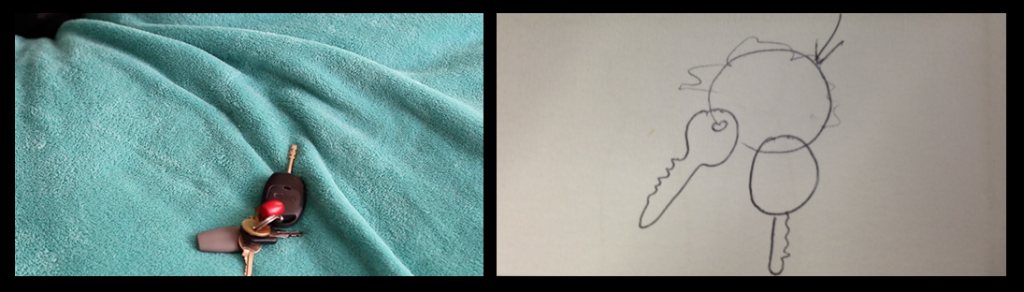
Teacher: "The focus on the keys is very nice and it is clear you did this before starting the scene."
Shot 34
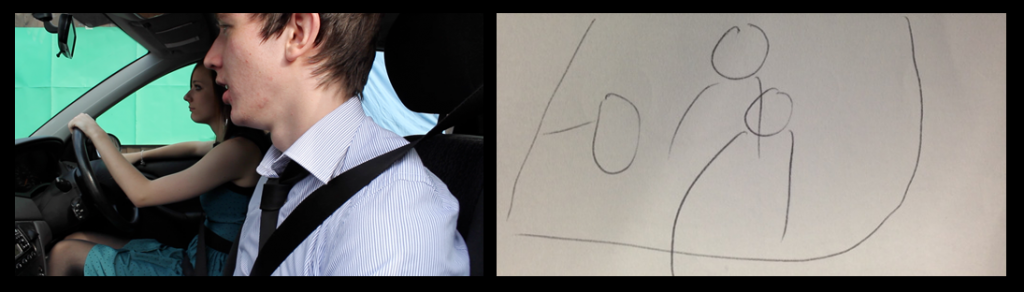
Colleague 3: "This shot works well and, having seen the edited footage already, it works really well, but I would advise you use green screen as little as possible from here on out because removing the undesired elements is a lot of work."
Teacher: "The movement is nice and smooth which utilises your dolly well."
Shot 34.5
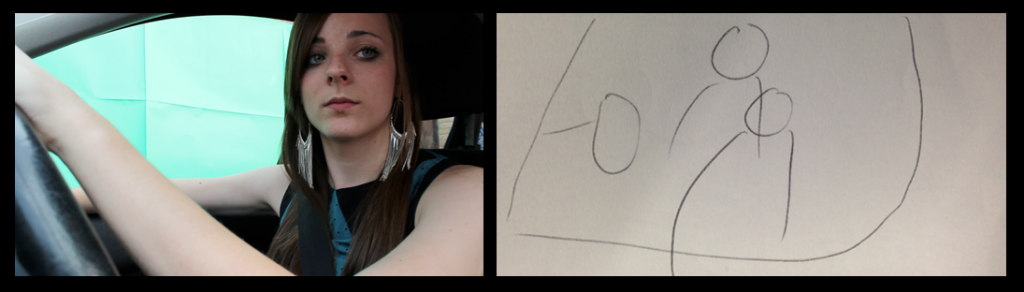
Colleague 2: "Like Colleague 3 said, the green screen does still look good, but it is obviously a lot of work which could be avoided. If you were planning again, it may have been better to film with an actual background though steadiness is compromised."
Shot 37
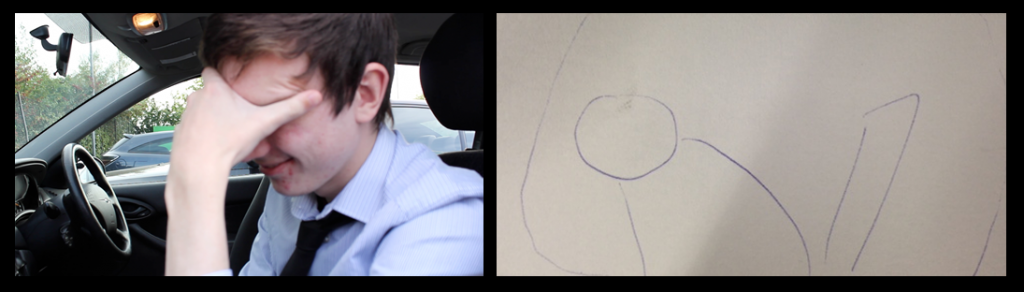
Colleague 1: "I really like this shot, though the focus could be slightly sharper; the emotion really shines through."
Teacher: "The closeness to the character and his sheer emotion is almost eery - I feel your choice of actor was well done as they have really committed themselves to the performance."
Shot 49
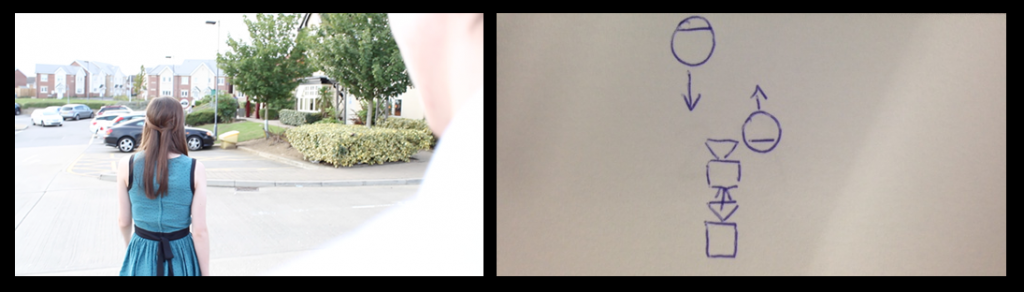
Teacher: "Using steadicam, you have followed the character well which was your intention - the turn could be longer though due to that the shot doesn't last too long."
Recount of First Video Shoot
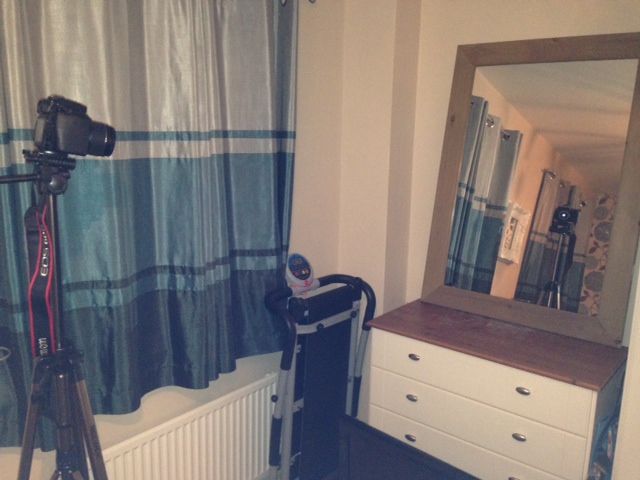 The first video shoot was to complete all of the external and non-venue location scenes so that the main focus is to secure the venue shots when I have received confirmation of a location. As the filming involved only a few scenes and was my first shoot, I want to evaluate the work shot by shot below, detailing changes I made in production and how they will benefit me in the long run. Unfortunately, due to the sheer mass of shots that will be filmed on location, I won't be able to be as detailed with every shot, but will ensure all changes are noted for exposition on either my blog or overall evaluation. Shot 35 and 39 were omitted in filming as I decided they were unneeded.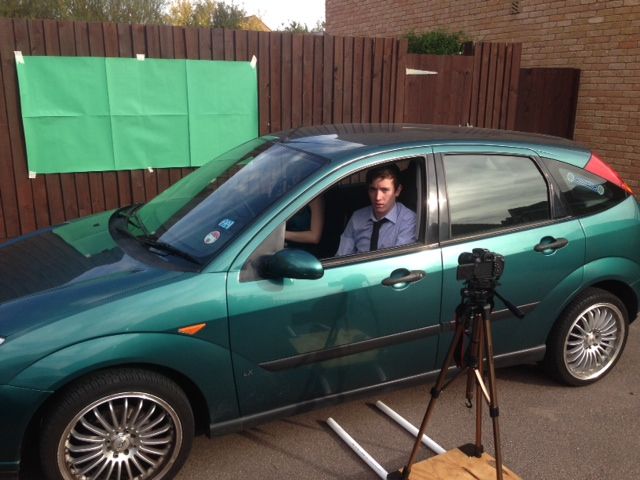
The above is evidence of the most adventurous shot of the day; I will delve further in evaluating it when I reach it below, but it required the use of a green screen, two actors and a camera dolly. This will then be post-produced to give the effect that the car is moving.
Shot 25
This shot needed to be precisely framed, though once it was it looked very nice. When I conceptualised the shot, I did not anticipate how the reflections would work, but the overall idea was clear. I also decided that the scene would flow easier if I swapped the two characters around which was decided on the shoot.
Shot 26
This shot worked as expected, I focused the lens with the keys in shot to begin with to perfect it, before removing them to begin filming. I am glad the keys weren't entirely central as the shot then looks less set up.
Shot 27
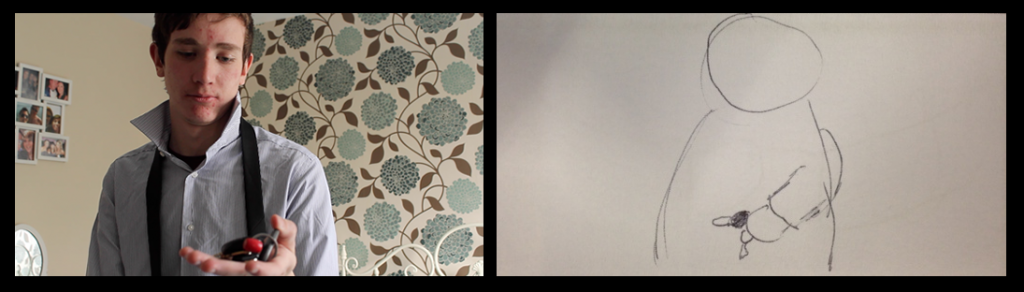
As it was a tracking shot, this took a few takes, but worked as expected so didn't take any longer than needed. I like the framing and focus of the shot - offering a close mid shot which reveals the emotion of the actor.
Shot 34
Having begun the chroma key aspect of this shot, editing out the green and background of the car, the shot is proving very effective. The process does, however take a very long time requiring rotoscoping and keying. Any remaining green edges are also removed when I desaturate the video in post production.
Shot 34.5
This shot also was difficult to rotoscope as there are green reflections on the actors hair, though after rotoscoping and post production it looks realistic and serves it's purpose.
Shot 36
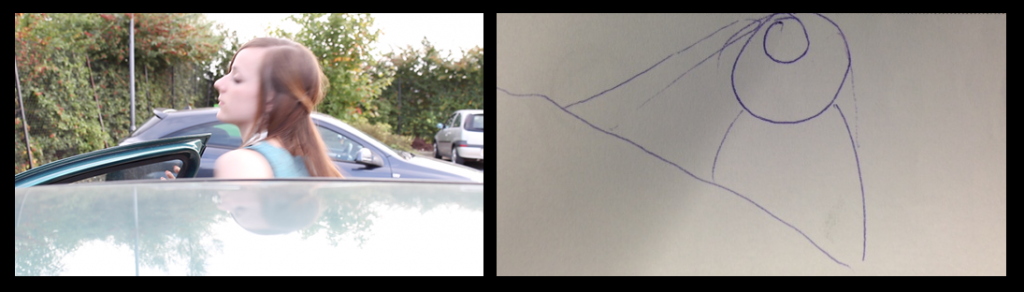 Again, taking a couple takes to ensure the shot was correct, I like the final shot and an unplanned element which is the shake of the camera as the door slams is really effective, i feel.
Shot 37 & 38
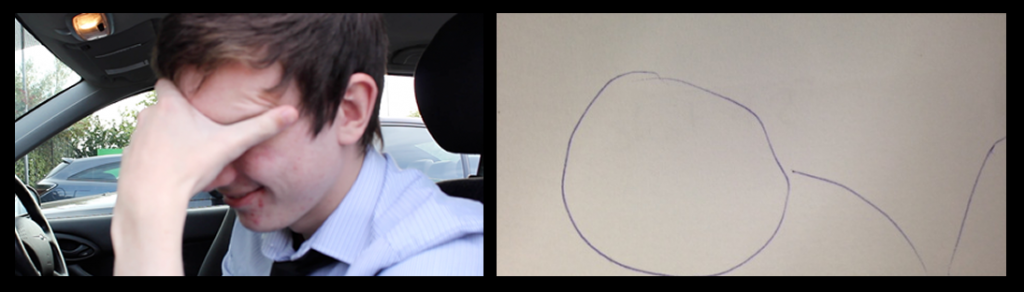
Directing the actor slightly differently from the storyboard, I chose not to have the actor leaning forward which effects the timing of the following shot which will now be a slightly zoomed version of the same footage.
Shot 49 & 50
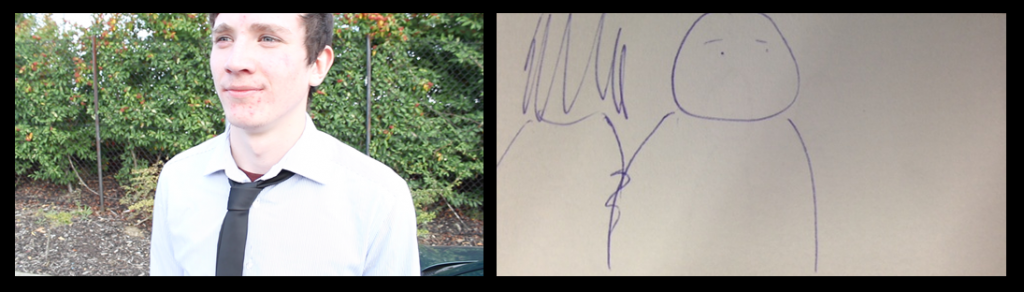
The content of this shot is slightly different though the effect is the same; rather than a barge of the shoulder I have the male character calling after the female who turns and then walks on as if to 'snub' him. The next shot is a reverse shot to show the male characters reaction and I feel this shows well. I would, however, like to lower the lighting in post production so it is not so glaring.
Venue Enquiry
Music Video Final Storyboard
After I had completed my draft storyboard of ideas for the production, I knew they would need refining into a comprehensive storyboard of shots complete with timings and detailed descriptions. I have compiled the final shots into a presentation which can be found below.
I wanted to wait until I had filmed a lot of my footage, because - as you can see - I knew I would be adding a number of revisions and retimings to make the shots fit. Due to the crossings out etc. the original idea are still apparent, however, so I feel this is a cohesive representation of my planning process.
Shooting Plan for First Video Shoot
The first scenes I plan to film are few, but one of which quite adventurous which requires a small amount of forward planning. The first requires the dressing of a bedroom set to film a long take flashback in a mirror, though the second involves me artificially making a car look like it's moving while it is, in actuality, stationary and creating the special effect of the camera moving through the cars window. Most of the work on this scene, however, will be done in post so it should not complicate filming so much. Below is my shot list and below that a plan of Shot 34 which is the most difficult:


Shot 34
Equipment needed:
- Camera Crane
- Camera Dolly
- Tripod
- Greenscreen
The shot involves a slow zoom in to the window of a car while it is apparently moving. The camera will show the effect of dissolving through the passenger door window and showing the argument from within. This will be added in post production via motion tracking in Adobe After Effects. To achieve the slow zoom and eventual ending of the camera being inside the car, I will be mounting my camera crane on my camera dolly so that I can track towards the car on the dolly and the extended arm will enter the car. This must be extremely smooth as, even though I am using motion tracking, the smoother the shot the more professional it shall eventually seem. Before tracking, some of the area around the car may be visible which I must either mask out or ensure they are covered by the green screen.
Theory Application: Andrew Goodwin
Andrew Goodwin
Andrew Goodwin is a theorist that focuses on Music Videos, so it is very applicable to this project. He states that there are five key aspects to a successful music Video that an audience member looks out for and is ultimately satisfied by. These are as follows:
- Thought Beats
- Narrative & Performance
- Star Image
- Relation of Visuals to the Song
- Technical Aspects of the Music Video
The least obvious of these five is the Thought Beats - it relates to seeing the sound in your head and, ultimately, creating links between the style and sound of a song with the artist who it is created for. Music Videos must therefore use appropriate imagery to relate with the audience and enforce memorability.
The narrative and performance is important as an audience member does not immediately understand an entire narrative from just the song involved. With the addition of the Music Video's narrative, the whole story is conveyed and the audience no longer need to imagine the story. In this aspect, Goodwin states how important the lip sync is to a Music Video and how it ties up the authenticity of a story's relation to the singer/actor.
 The star image relates to the individual (often the singer) that the audience is persuaded to support and connect to. This not only applies to Music Videos, but Band management where even in a larger band, a star is formed that the audience eventually likes more than any other, such as Take That with Robbie Williams and after his leave, Gary Barlow or The Jacksons with Michael.
I believe, most importantly, are the visuals being parallel to the audio - unless the intent is to be purposefully contrapuntal - and that is one of the aspects detailed by Goodwin. There are three forms of this:
- Illustration: Visuals that are entirely parallel, sometimes fully representing the lyrics exactly with very little difference in story.
- Amplification: Desired meanings are conveyed, used more to represent morals.
- Disjuncture: As aforementioned, visuals that are completely contrapuntal to the audio and often abstract.
 The technical aspects are very important; they involve the skills required and knowledge needed for a successful text. The four main areas are Camera Work, Editing, Mise-En-Scene and Sound. In terms of camera work, a successful piece must portray an array of shot speed, movement and design to interest the audience. Editing in Music Videos refers mostly to cutting to the beat of a song and creating parallel pace. Mise-en-scene is important as it refers to everything in the scene and manipulating this can produce a range of desired effects, enabling messages to be conveyed well. Sound is, oddly, not as relevant as the others other than a relation between the visuals and song. It sometimes applies with foley which should be of a high enough quality to fit with the rest of the project.
Theory Application: Uses and Gratifications
Uses and Gratification Theory
The Uses and Gratifications theory (U&G) is widely renowned as the turnaround theory; it doesn't challenge the claims of other theories, it focuses on an area of the media that no other had done before. Where most media theories focus on 'media effects' or what media does to people, the U&G theory outlines what people do with media. The gratifications side of the theory also covers the older side of theories as gratification involves the positive effects of media on people and therefore covers earlier areas.

Originally conceptualised in 1940, the U&G theory was not popularised until 1974 when Blumler and Katz wrote about the individual needs of audience socially and psychologically. Despite this, however, the lesser known theorist, Denis McQuail detailed the four categories all audiences fall within when they consume media and what they, therefore, do with this media, which is the most famous form of the U&G theory. Below are the four categories and their criteria:
Information
The Uses and Gratifications theory (U&G) is widely renowned as the turnaround theory; it doesn't challenge the claims of other theories, it focuses on an area of the media that no other had done before. Where most media theories focus on 'media effects' or what media does to people, the U&G theory outlines what people do with media. The gratifications side of the theory also covers the older side of theories as gratification involves the positive effects of media on people and therefore covers earlier areas.

Originally conceptualised in 1940, the U&G theory was not popularised until 1974 when Blumler and Katz wrote about the individual needs of audience socially and psychologically. Despite this, however, the lesser known theorist, Denis McQuail detailed the four categories all audiences fall within when they consume media and what they, therefore, do with this media, which is the most famous form of the U&G theory. Below are the four categories and their criteria:
Information
- News on events globally and locally
- Opinions or popular advice
- Teaching skills or knowledge
- Finding similar views to their own
- Evaluating own views
- Identifying whether another's views are like their own
- Social news for empathy
- Identifying with others (extension of identifying one's self)
- Finding conversation subjects
- Substitute for real-life similar views
- Allows for relating with family and friends.
- Escapism and immersing one's self
- Relaxation
- Confirmation of cultural views (similar to identity, but giving enjoyment due to this)
- Time wasting
- Evoke sexual arousal or emotion
The Uses and Gratifications must be taken into consideration when creating Media texts as the producer must have a plan for their audiences uses. The most effective of these is to create a text which attains a majority of audience members in the integration and social interaction category as these criteria involved 'integration' with others in 'society'. The more people an audience member interacts with concerning the test, therefore, the more views and fans a video will receive. This can be done by involvement of common events which are likely to evoke discussion or a great level of narrative which will gain an audience that wants to share the text with others. A great example of this is the way TV Show producers use cliff hangers from episode to episode; along with social media, audience members choose to discuss the excitement and anticipation with some who are yet to watch, but likely to do so.
Camera Difficulty

Not only for this project, but to have my own high quality, professional device for filming future projects and taking still images, I decided to upgrade my camera. I previously had the Canon EOS 1100D which was used for my AS Level Media film, but does not provide the same film quality as the more advanced models. As a replacement, I decided to purchase the Canon EOS 650D, which is the cheapest model which offers 1080p video recording, but still has a similar ISO range.
Unfortunately, however, the company I 'purchased' the camera from was illegitimate and there were hidden costs which I was not notified of before purchasing. Cancelling this order, I then had to work extremely hard to retrieve my money as a refund, resorting finally to claiming through PayPal due to the difficulty the company posed.
Once the money came through from PayPal, I decided to find a reputable, high street company to purchase the camera from which posed another problem. Most stockists do not offer the 650D, though they do offer other models. I, therefore, began to look at the 60D which is a fair few models up from the 650D, let alone the 1100D and provides a much higher quality of video and stills. It also supports a greater range of features which are well worth the extra price. I, therefore, knowing should I order this I would never need another camera, opted for the 60D.
Now that I have the camera, I can begin filming which has kept me behind slightly.
Equipment Choice


Alongside this, I am using the tripod I used for my AS Production which is very lightweight, but sturdy so can be used for stable shots, but is portable enough for stabilised, handy cam shots.
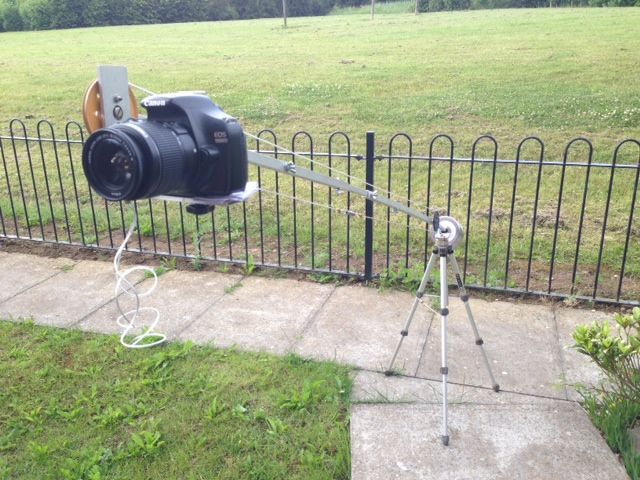 On top of these two, essential pieces of equipment, there are a number of specialist implements I plan to use which will embellish and accentuate my project perfectly, adding that desired professional feel. These include the Camera Crane I have already featured a post on and a soft box of my own design and build. Below are a few pictures of the process and explanation of it's components.
Soft Box
The soft box consists of:
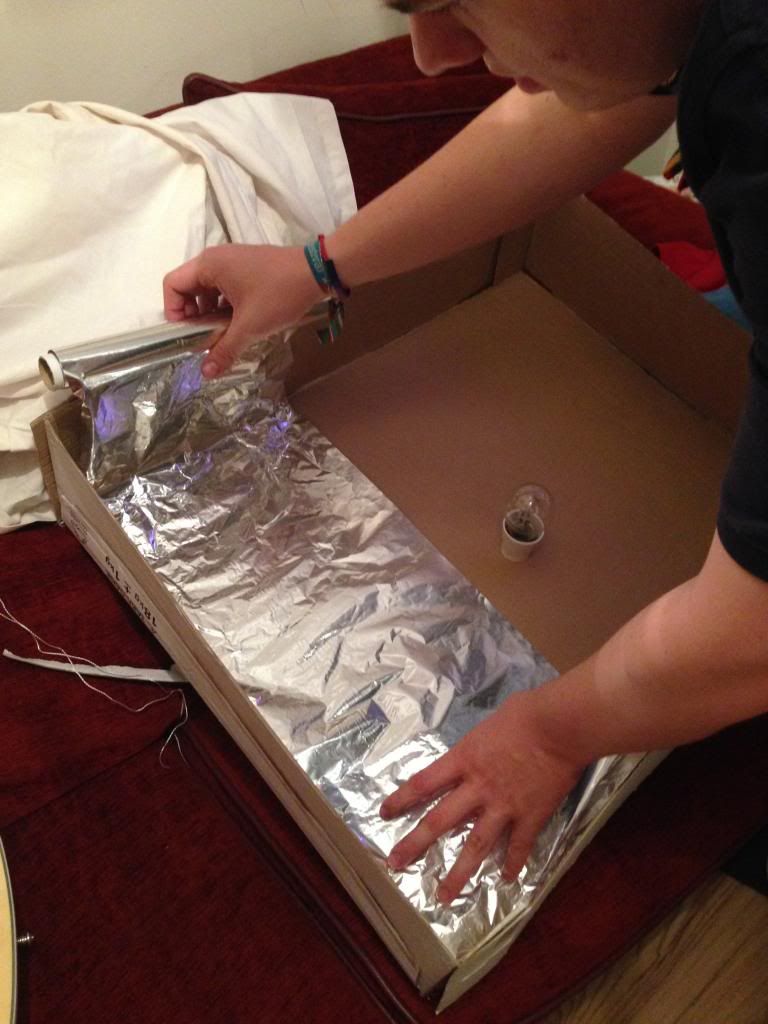

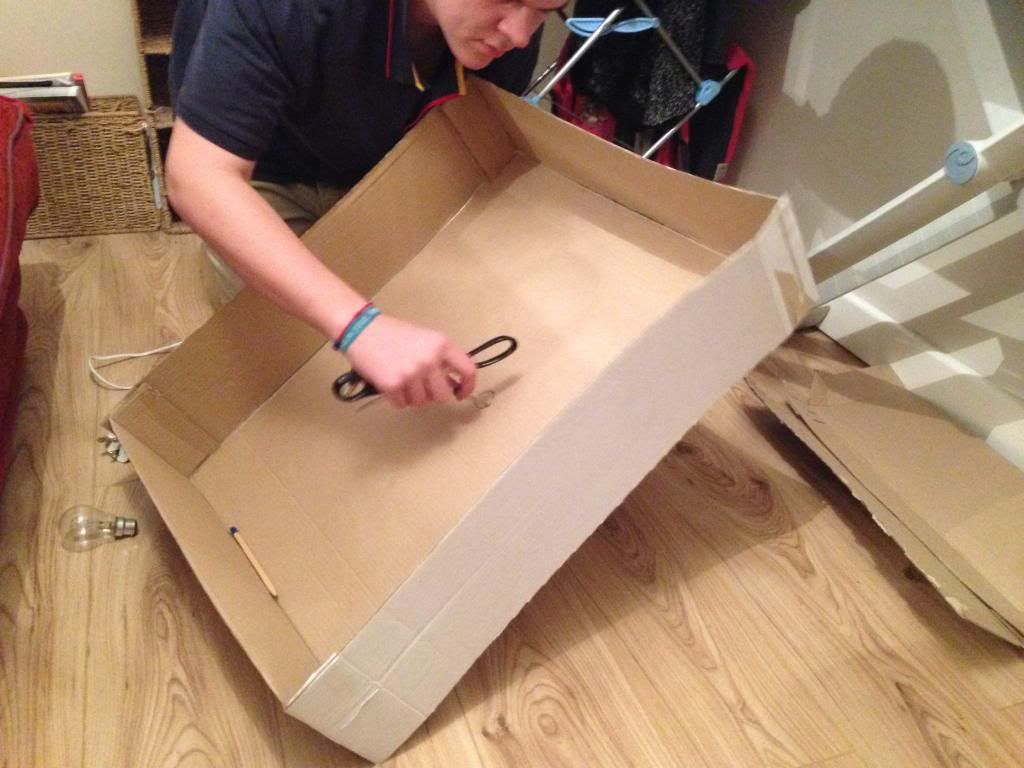
Forming a small, lidless box out of larger sheets of cardboard, I began the softbox. I then measured the circumference of the clamp light so that it could be mounted in the box' back.
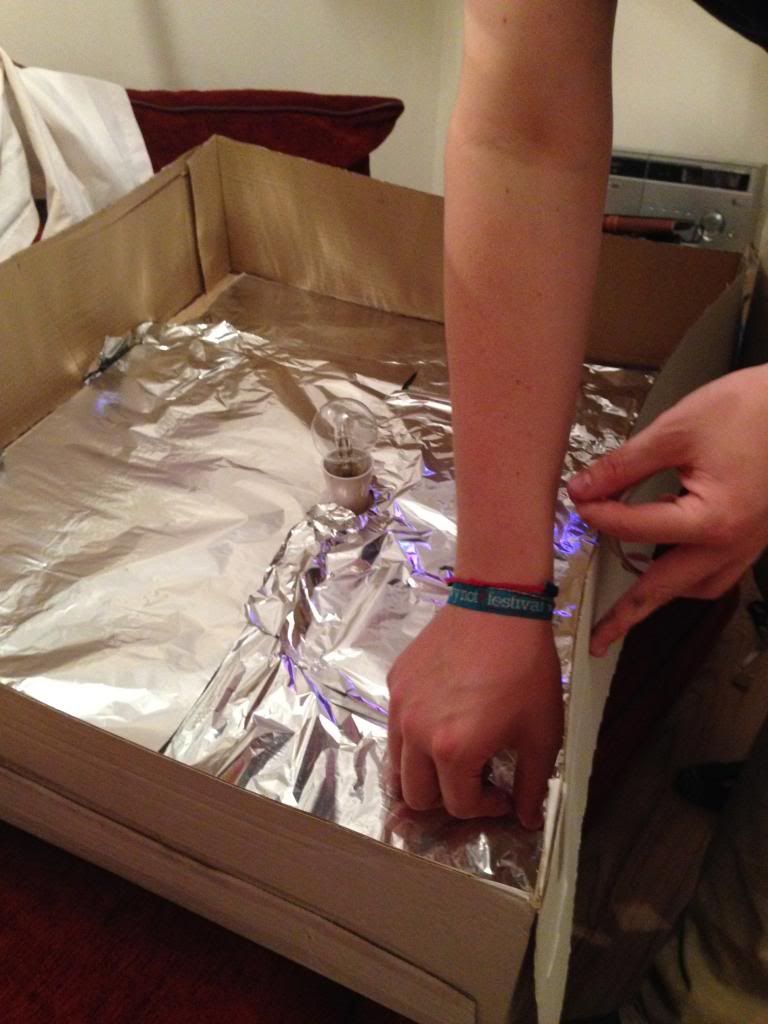
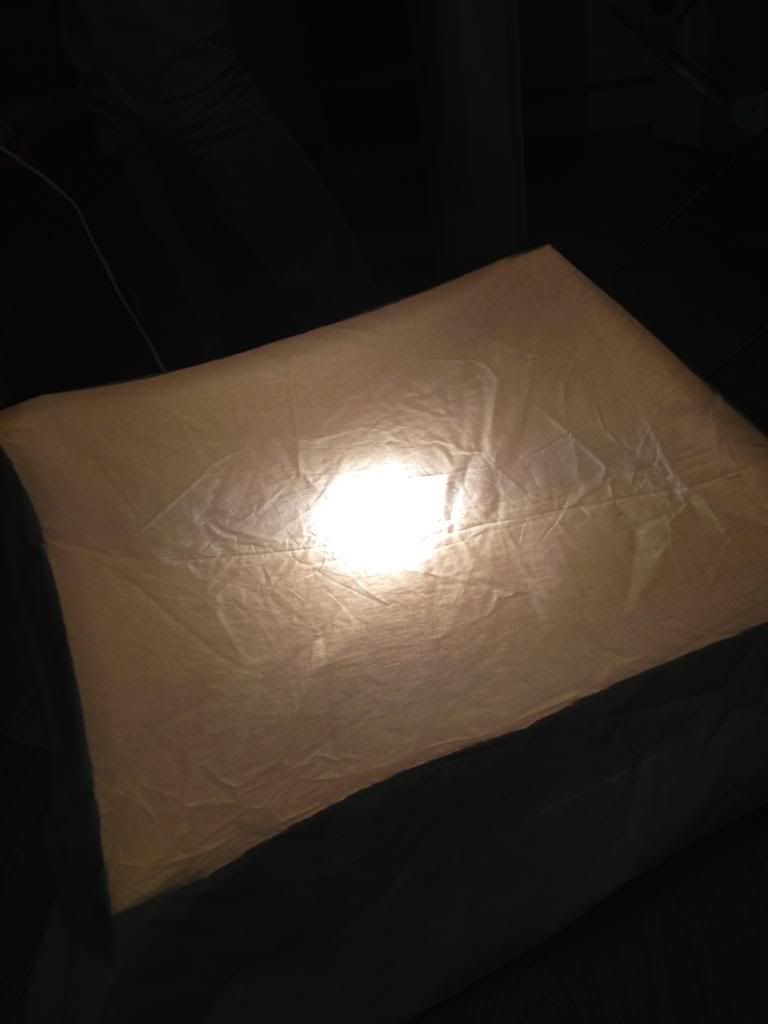 Firstly, I placed the white sheet over the cardboard at this time, but the light did not reflect enough around the box and was too central (left). To remedy this, I decided to line the box with tinfoil which works by bouncing the light around the box and then through the dampening sheet.
With this lining, the light spreads much better and it can even be used without the sheet as a powerful 'flood' light should my setting be dark enough for it. This is a very cheap, but effective way of achieving a well lit scene and it should help a lot for production. As the light bulb is a tungsten, indoor bulb I may have to alter the white balance on my camera for the scenes I involve this in - especially if it will be the main source of light for the shots.
Revision of Shot Design
Some of the shots in my storyboard are quite adventurous. Those that are adventurous can be categorised into those that I know will work, but may need some planning before hand and those that I have never tried before and cannot be sure will work.
 To remedy this, I revised the shot and now know how I will successfully produce it. Acquiring green paper from the Art department at my school, I have been able to redesign a working shot using a portable green screen where the background of the acting scene does not need to be the same and it can be superimposed over the top. To acquire the shot I will film the scene twice. The first shot is a 360 pan around a spot as if there were characters in the centre. To accompany this, the green screened shot will involve the actors dancing and spinning on the spot to recreate the camera movement. Editing these two together, if the speed is the same, will look like the shot was filmed as one and the movement is entirely natural.
The most difficult of these is a ghosted shot made up of two identical shots, one with just the background and one with the background and actors. Overlaying these two shots and reducing the acting layers opacity produces a ghosting effect.
 I have other shots similar to this, but the difference here is I want the camera to slowly track around the characters. To produce the effect I would need to reproduce the exact same movement for two separate shots. Due to how difficult this is, I attempted to test the shot which added the obstacle I expected; producing the same movement is nigh on impossible and I can not be sure I will be able to do so smoothly.
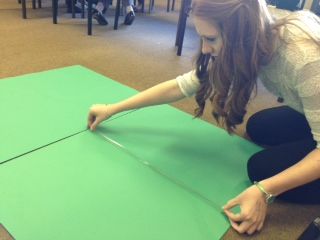 I have other shots similar to this, but the difference here is I want the camera to slowly track around the characters. To produce the effect I would need to reproduce the exact same movement for two separate shots. Due to how difficult this is, I attempted to test the shot which added the obstacle I expected; producing the same movement is nigh on impossible and I can not be sure I will be able to do so smoothly.
 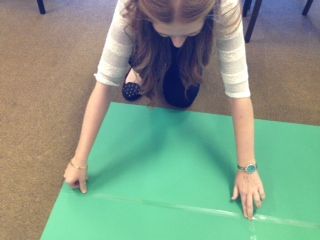 To remedy this, I revised the shot and now know how I will successfully produce it. Acquiring green paper from the Art department at my school, I have been able to redesign a working shot using a portable green screen where the background of the acting scene does not need to be the same and it can be superimposed over the top. To acquire the shot I will film the scene twice. The first shot is a 360 pan around a spot as if there were characters in the centre. To accompany this, the green screened shot will involve the actors dancing and spinning on the spot to recreate the camera movement. Editing these two together, if the speed is the same, will look like the shot was filmed as one and the movement is entirely natural.
Subscribe to:
Posts (Atom)