Venue Enquiry

Music Video Final Storyboard
After I had completed my draft storyboard of ideas for the production, I knew they would need refining into a comprehensive storyboard of shots complete with timings and detailed descriptions. I have compiled the final shots into a presentation which can be found below.
I wanted to wait until I had filmed a lot of my footage, because - as you can see - I knew I would be adding a number of revisions and retimings to make the shots fit. Due to the crossings out etc. the original idea are still apparent, however, so I feel this is a cohesive representation of my planning process.
Shooting Plan for First Video Shoot
The first scenes I plan to film are few, but one of which quite adventurous which requires a small amount of forward planning. The first requires the dressing of a bedroom set to film a long take flashback in a mirror, though the second involves me artificially making a car look like it's moving while it is, in actuality, stationary and creating the special effect of the camera moving through the cars window. Most of the work on this scene, however, will be done in post so it should not complicate filming so much. Below is my shot list and below that a plan of Shot 34 which is the most difficult:


Shot 34
Equipment needed:
- Camera Crane
- Camera Dolly
- Tripod
- Greenscreen
The shot involves a slow zoom in to the window of a car while it is apparently moving. The camera will show the effect of dissolving through the passenger door window and showing the argument from within. This will be added in post production via motion tracking in Adobe After Effects. To achieve the slow zoom and eventual ending of the camera being inside the car, I will be mounting my camera crane on my camera dolly so that I can track towards the car on the dolly and the extended arm will enter the car. This must be extremely smooth as, even though I am using motion tracking, the smoother the shot the more professional it shall eventually seem. Before tracking, some of the area around the car may be visible which I must either mask out or ensure they are covered by the green screen.
Theory Application: Andrew Goodwin
Andrew Goodwin
Andrew Goodwin is a theorist that focuses on Music Videos, so it is very applicable to this project. He states that there are five key aspects to a successful music Video that an audience member looks out for and is ultimately satisfied by. These are as follows:
- Thought Beats
- Narrative & Performance
- Star Image
- Relation of Visuals to the Song
- Technical Aspects of the Music Video
The least obvious of these five is the Thought Beats - it relates to seeing the sound in your head and, ultimately, creating links between the style and sound of a song with the artist who it is created for. Music Videos must therefore use appropriate imagery to relate with the audience and enforce memorability.
The narrative and performance is important as an audience member does not immediately understand an entire narrative from just the song involved. With the addition of the Music Video's narrative, the whole story is conveyed and the audience no longer need to imagine the story. In this aspect, Goodwin states how important the lip sync is to a Music Video and how it ties up the authenticity of a story's relation to the singer/actor.
 The star image relates to the individual (often the singer) that the audience is persuaded to support and connect to. This not only applies to Music Videos, but Band management where even in a larger band, a star is formed that the audience eventually likes more than any other, such as Take That with Robbie Williams and after his leave, Gary Barlow or The Jacksons with Michael.
I believe, most importantly, are the visuals being parallel to the audio - unless the intent is to be purposefully contrapuntal - and that is one of the aspects detailed by Goodwin. There are three forms of this:
- Illustration: Visuals that are entirely parallel, sometimes fully representing the lyrics exactly with very little difference in story.
- Amplification: Desired meanings are conveyed, used more to represent morals.
- Disjuncture: As aforementioned, visuals that are completely contrapuntal to the audio and often abstract.
 The technical aspects are very important; they involve the skills required and knowledge needed for a successful text. The four main areas are Camera Work, Editing, Mise-En-Scene and Sound. In terms of camera work, a successful piece must portray an array of shot speed, movement and design to interest the audience. Editing in Music Videos refers mostly to cutting to the beat of a song and creating parallel pace. Mise-en-scene is important as it refers to everything in the scene and manipulating this can produce a range of desired effects, enabling messages to be conveyed well. Sound is, oddly, not as relevant as the others other than a relation between the visuals and song. It sometimes applies with foley which should be of a high enough quality to fit with the rest of the project.
Theory Application: Uses and Gratifications
Uses and Gratification Theory
The Uses and Gratifications theory (U&G) is widely renowned as the turnaround theory; it doesn't challenge the claims of other theories, it focuses on an area of the media that no other had done before. Where most media theories focus on 'media effects' or what media does to people, the U&G theory outlines what people do with media. The gratifications side of the theory also covers the older side of theories as gratification involves the positive effects of media on people and therefore covers earlier areas.

Originally conceptualised in 1940, the U&G theory was not popularised until 1974 when Blumler and Katz wrote about the individual needs of audience socially and psychologically. Despite this, however, the lesser known theorist, Denis McQuail detailed the four categories all audiences fall within when they consume media and what they, therefore, do with this media, which is the most famous form of the U&G theory. Below are the four categories and their criteria:
Information
The Uses and Gratifications theory (U&G) is widely renowned as the turnaround theory; it doesn't challenge the claims of other theories, it focuses on an area of the media that no other had done before. Where most media theories focus on 'media effects' or what media does to people, the U&G theory outlines what people do with media. The gratifications side of the theory also covers the older side of theories as gratification involves the positive effects of media on people and therefore covers earlier areas.

Originally conceptualised in 1940, the U&G theory was not popularised until 1974 when Blumler and Katz wrote about the individual needs of audience socially and psychologically. Despite this, however, the lesser known theorist, Denis McQuail detailed the four categories all audiences fall within when they consume media and what they, therefore, do with this media, which is the most famous form of the U&G theory. Below are the four categories and their criteria:
Information
- News on events globally and locally
- Opinions or popular advice
- Teaching skills or knowledge
- Finding similar views to their own
- Evaluating own views
- Identifying whether another's views are like their own
- Social news for empathy
- Identifying with others (extension of identifying one's self)
- Finding conversation subjects
- Substitute for real-life similar views
- Allows for relating with family and friends.
- Escapism and immersing one's self
- Relaxation
- Confirmation of cultural views (similar to identity, but giving enjoyment due to this)
- Time wasting
- Evoke sexual arousal or emotion
The Uses and Gratifications must be taken into consideration when creating Media texts as the producer must have a plan for their audiences uses. The most effective of these is to create a text which attains a majority of audience members in the integration and social interaction category as these criteria involved 'integration' with others in 'society'. The more people an audience member interacts with concerning the test, therefore, the more views and fans a video will receive. This can be done by involvement of common events which are likely to evoke discussion or a great level of narrative which will gain an audience that wants to share the text with others. A great example of this is the way TV Show producers use cliff hangers from episode to episode; along with social media, audience members choose to discuss the excitement and anticipation with some who are yet to watch, but likely to do so.
Camera Difficulty

Not only for this project, but to have my own high quality, professional device for filming future projects and taking still images, I decided to upgrade my camera. I previously had the Canon EOS 1100D which was used for my AS Level Media film, but does not provide the same film quality as the more advanced models. As a replacement, I decided to purchase the Canon EOS 650D, which is the cheapest model which offers 1080p video recording, but still has a similar ISO range.
Unfortunately, however, the company I 'purchased' the camera from was illegitimate and there were hidden costs which I was not notified of before purchasing. Cancelling this order, I then had to work extremely hard to retrieve my money as a refund, resorting finally to claiming through PayPal due to the difficulty the company posed.
Once the money came through from PayPal, I decided to find a reputable, high street company to purchase the camera from which posed another problem. Most stockists do not offer the 650D, though they do offer other models. I, therefore, began to look at the 60D which is a fair few models up from the 650D, let alone the 1100D and provides a much higher quality of video and stills. It also supports a greater range of features which are well worth the extra price. I, therefore, knowing should I order this I would never need another camera, opted for the 60D.
Now that I have the camera, I can begin filming which has kept me behind slightly.
Equipment Choice


Alongside this, I am using the tripod I used for my AS Production which is very lightweight, but sturdy so can be used for stable shots, but is portable enough for stabilised, handy cam shots.
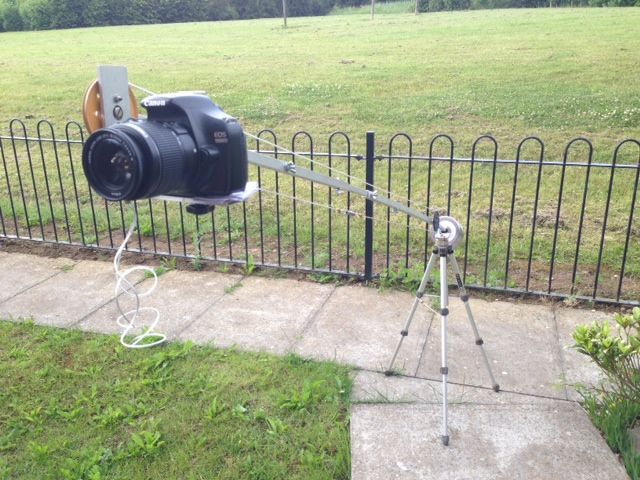 On top of these two, essential pieces of equipment, there are a number of specialist implements I plan to use which will embellish and accentuate my project perfectly, adding that desired professional feel. These include the Camera Crane I have already featured a post on and a soft box of my own design and build. Below are a few pictures of the process and explanation of it's components.
Soft Box
The soft box consists of:
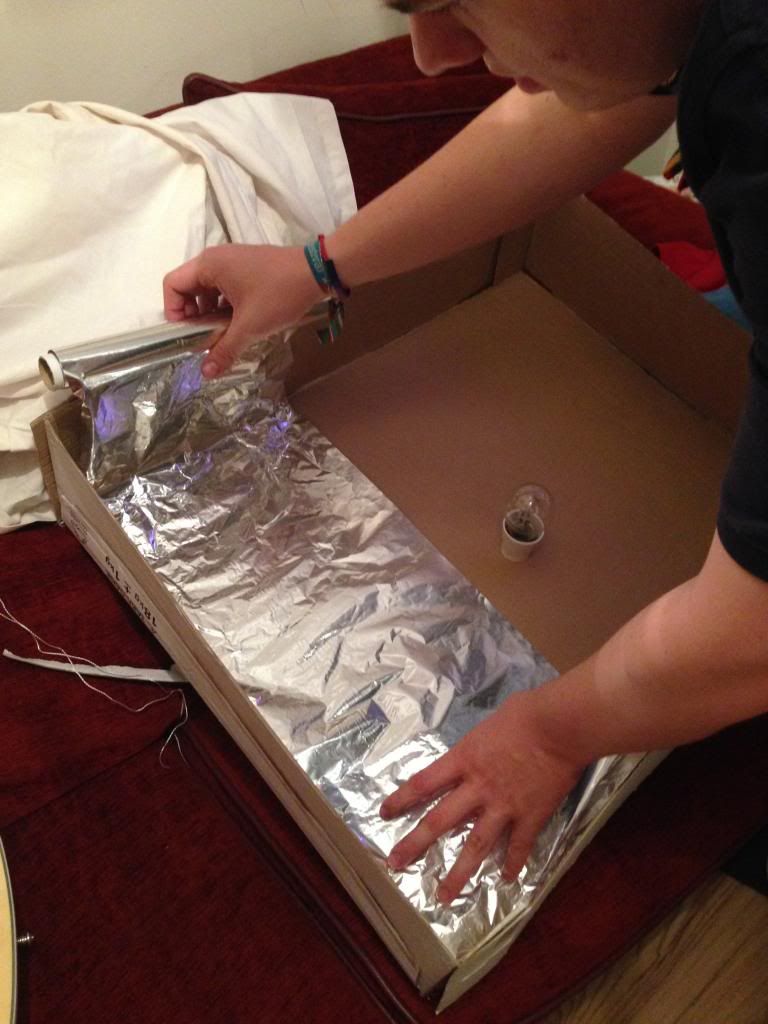

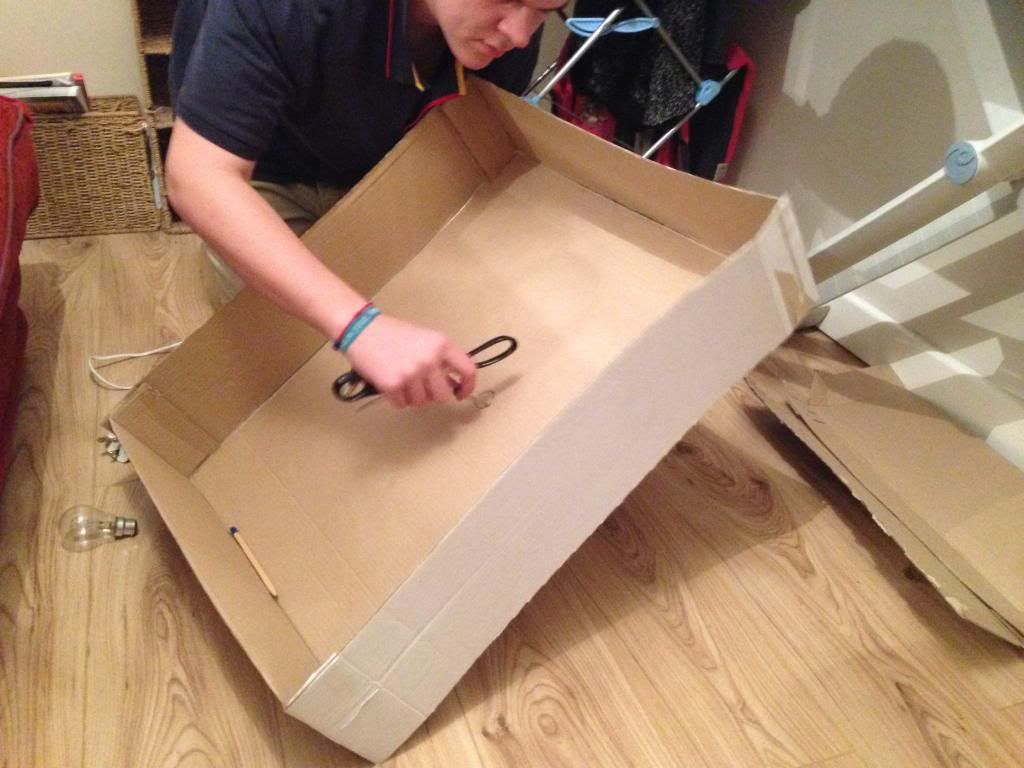
Forming a small, lidless box out of larger sheets of cardboard, I began the softbox. I then measured the circumference of the clamp light so that it could be mounted in the box' back.
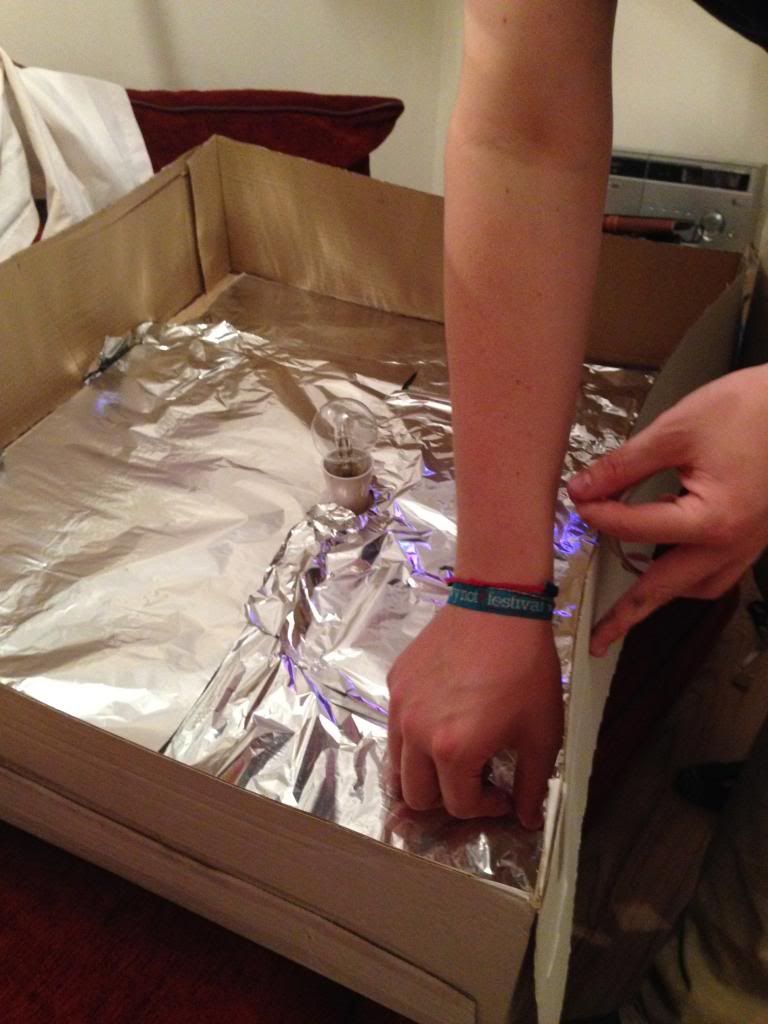
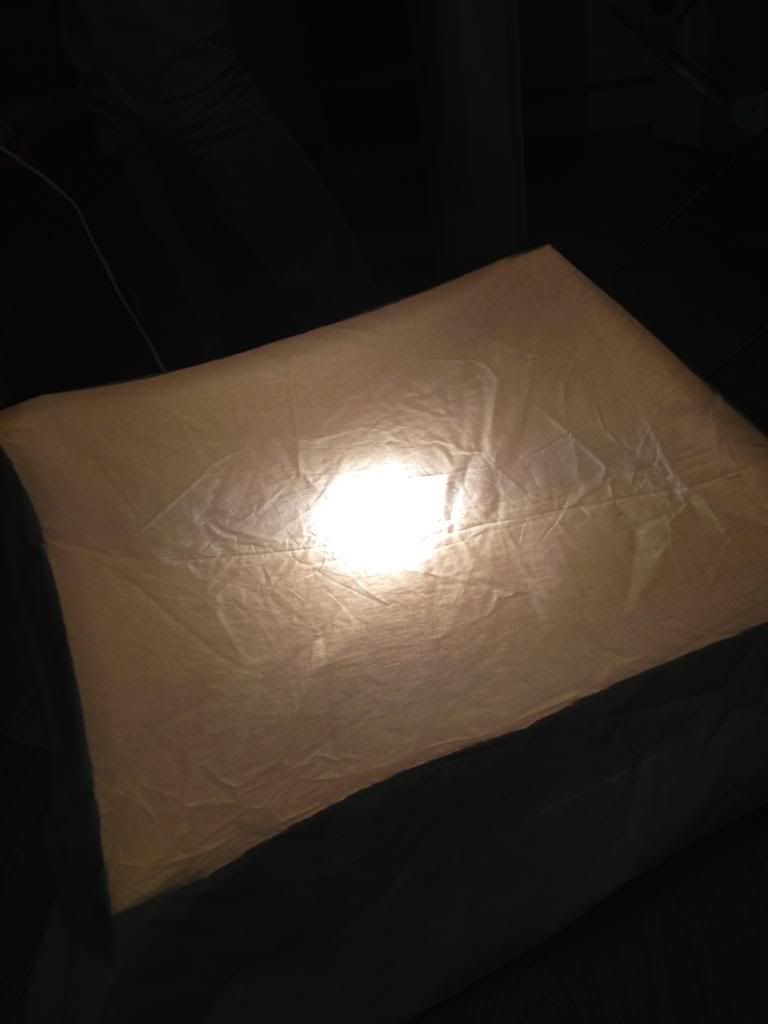 Firstly, I placed the white sheet over the cardboard at this time, but the light did not reflect enough around the box and was too central (left). To remedy this, I decided to line the box with tinfoil which works by bouncing the light around the box and then through the dampening sheet.
With this lining, the light spreads much better and it can even be used without the sheet as a powerful 'flood' light should my setting be dark enough for it. This is a very cheap, but effective way of achieving a well lit scene and it should help a lot for production. As the light bulb is a tungsten, indoor bulb I may have to alter the white balance on my camera for the scenes I involve this in - especially if it will be the main source of light for the shots.
Revision of Shot Design
Some of the shots in my storyboard are quite adventurous. Those that are adventurous can be categorised into those that I know will work, but may need some planning before hand and those that I have never tried before and cannot be sure will work.
 To remedy this, I revised the shot and now know how I will successfully produce it. Acquiring green paper from the Art department at my school, I have been able to redesign a working shot using a portable green screen where the background of the acting scene does not need to be the same and it can be superimposed over the top. To acquire the shot I will film the scene twice. The first shot is a 360 pan around a spot as if there were characters in the centre. To accompany this, the green screened shot will involve the actors dancing and spinning on the spot to recreate the camera movement. Editing these two together, if the speed is the same, will look like the shot was filmed as one and the movement is entirely natural.
The most difficult of these is a ghosted shot made up of two identical shots, one with just the background and one with the background and actors. Overlaying these two shots and reducing the acting layers opacity produces a ghosting effect.
 I have other shots similar to this, but the difference here is I want the camera to slowly track around the characters. To produce the effect I would need to reproduce the exact same movement for two separate shots. Due to how difficult this is, I attempted to test the shot which added the obstacle I expected; producing the same movement is nigh on impossible and I can not be sure I will be able to do so smoothly.
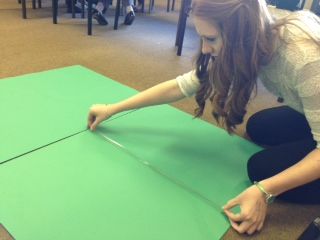 I have other shots similar to this, but the difference here is I want the camera to slowly track around the characters. To produce the effect I would need to reproduce the exact same movement for two separate shots. Due to how difficult this is, I attempted to test the shot which added the obstacle I expected; producing the same movement is nigh on impossible and I can not be sure I will be able to do so smoothly.
 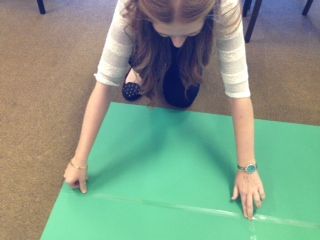 To remedy this, I revised the shot and now know how I will successfully produce it. Acquiring green paper from the Art department at my school, I have been able to redesign a working shot using a portable green screen where the background of the acting scene does not need to be the same and it can be superimposed over the top. To acquire the shot I will film the scene twice. The first shot is a 360 pan around a spot as if there were characters in the centre. To accompany this, the green screened shot will involve the actors dancing and spinning on the spot to recreate the camera movement. Editing these two together, if the speed is the same, will look like the shot was filmed as one and the movement is entirely natural.
Marketing and Distribution
In a hypothetical sense, if this project was to be produced by anyone other than a student in school, certain areas would need to be funded. I was able to secure locations and equipment through both the fact that I am a student and my own involvement in building and designing etc.
The night club that agreed to allow me to film, for instance, is a business. If the project was being produced for a profit, therefore, the hire of the room would be factored in to the budget and they would most likely charge whoever was producing the Music Video. I also used the resources to my disposal such as the actors car and my own home rearranged to suit the scene. A much more desirable affect could be achieved by designing a set from scratch and using a studio, for example. This would require funding for hire and materials to do so which must be funded.
In terms of equipment, both the camera crane and dolly were funded by resources I could acquire for free and individual budgets devised by my colleague and I. The best option would have been a professional jib, but again, funding factors in.
The funding for these purposes would most likely come from both the Production company producing the project and the artist who the project is for. Where funding from these two bodies is scarce, there is the option to apply for funding from public artist funding organisations or private charities. Organisations such as the Princes trust are interested in projects such as this as they promote both the producer and artists. They, also, offer mentors who are knowledgeable in the goal the fundee is attempting to help. This, however, is difficult and can not be done by many. Larger artists set to reap large profits, for instance, would not be entertained as they should have the capital to create the video to begin with. My own project, as it features an unsigned artist would be eligible for funding as they do not, necessary, have much backing.
The night club that agreed to allow me to film, for instance, is a business. If the project was being produced for a profit, therefore, the hire of the room would be factored in to the budget and they would most likely charge whoever was producing the Music Video. I also used the resources to my disposal such as the actors car and my own home rearranged to suit the scene. A much more desirable affect could be achieved by designing a set from scratch and using a studio, for example. This would require funding for hire and materials to do so which must be funded.
In terms of equipment, both the camera crane and dolly were funded by resources I could acquire for free and individual budgets devised by my colleague and I. The best option would have been a professional jib, but again, funding factors in.
The funding for these purposes would most likely come from both the Production company producing the project and the artist who the project is for. Where funding from these two bodies is scarce, there is the option to apply for funding from public artist funding organisations or private charities. Organisations such as the Princes trust are interested in projects such as this as they promote both the producer and artists. They, also, offer mentors who are knowledgeable in the goal the fundee is attempting to help. This, however, is difficult and can not be done by many. Larger artists set to reap large profits, for instance, would not be entertained as they should have the capital to create the video to begin with. My own project, as it features an unsigned artist would be eligible for funding as they do not, necessary, have much backing.
The History of Music Videos
 The term Music Video can no more easily be wholly defined that the term Film. In many ways, Music Videos are all films; a combination of Visuals and Audio to entertain or evoke some form of emotion from the audience. The earliest dated 'relative' to the music video would be The Little Lost Child by Edward B. Marks and Joe Stern who commissioned a visual track to be created which was timed to synchronise with the song itself. This was known as the illustrated song and, from there, the genre ballooned.
 The late 1920s brought with it the Sound Film (Synchronised Film to Music) which became an incredibly popular method of promoting an artist's song or album. Pinpointing the advent of the modern Music Video is tricky and impossible to be entirely precise, but the narrative style Video did not come into full fruition until the late 1970s and early 1980s. Prior to this, videos were predominantly performance show cases such as the plethora of Beatles hits which featured each member playing their respective instruments for the duration of the song. Post 80, however, Videos such as Michael Jackson's Thriller and Bad were released; the former including a defining moment in film history showing one of the first CG Werewolf transformations and the latter having been directed by the world renowned Martin Scorsese. This shows the integration Music Videos have with the Film industry and how much they have now progressed, from small accompanying stills to full blown epics to the extent that the most expensive Music Video to date cost $10.5 Million after inflation (Michael and Janet Jackson's Scream); seen as some films cost a miniscule fraction of this, the influence and importance of Music Videos are evident.
Camera Dolly
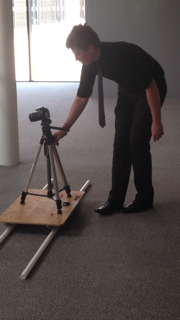
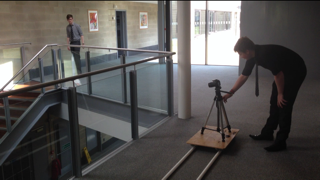 Along with a colleague that I worked with last year for my AS Production, I designed and built a portable camera dolly for complex tracking and moving shots. Using the schools facilities and a small budget subsidised by ourselves, we created a very useful implement that when used correctly produces really nice, professional looking shots.
What we found, however, was that without weighing down the board of the dolly, the movement was shakey. Our progression in learning about this process can be seen by the steadiness of the final shot. We decided to borrow weights from the Science department which worked perfectly.
Assembly
The main components of the dolly were as follows:
- 3m PVC Pipe x2
- Wooden Board
- 8 identical bearing wheels
- 4 steel angle plates
- Miscellaneous 1/4" nuts and bolts
A creation such as this required a small amount of equipment and as my Uncle - who helped me with the crane - was unavailable for this project, we utilised the available facilities in school. These included:
- Pillar Drill
- Alan Key
- Pliers
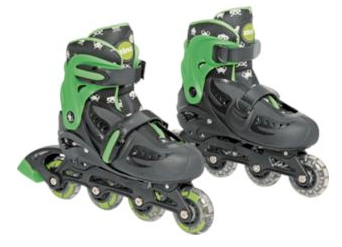
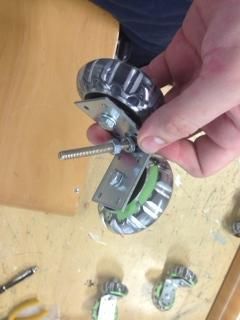 The most important component was acquiring the identical wheels. Upon researching these wheels, we found that individually they were quite pricey and bulk ordering didn't help much. We, therefore, decided the best route would be to purchase rollerblades and dissemble them. This being the most expensive aspect of the build costing us £14.99, though saving us in the long run. We mounted the resulting wheels to angle plates which could be suspended below the board to run on the PVC pipe.
The end result was a great, low budget dolly that, with the right execution, can create beautiful, professional shots.
Song Change
Contrary to my previous posts, I have decided to slightly alter my plans in relation to the song choice. Originally, I had planned to use the song Tin Pan Alley by The Gaslight Anthem, though in retrospect I don't feel the song suits. Firstly, I am fan of the song and not particularly the official recording. To therefore use the song, I would have to record my own version, potentially wasting time on a mediocre recording. Secondly, I feel that the lyrics and story-line of the song stray from the idea I have confirmed for the visuals.
To remedy this, I began to browse Unsigned.com to find a good choice of song which not only would be more suitable, but would allow me to use it without having to record my own version along with less restrictions on copyrights from the label. Fairly quickly, I came across an artist from Canada called Daniel Lewandowski who's acoustic song So Far (Now titled All I Want) immediately felt like the perfect choice. On further research, I found that he released a Studio version which I liked equally. Soon after this I was able to contact him to which he replied graciously giving his blessing to use the song. In addition, he has offered to create an improved mix of the song to my feedback to merge the acoustic and studio versions, in keeping with my original, acoustic premise.
To remedy this, I began to browse Unsigned.com to find a good choice of song which not only would be more suitable, but would allow me to use it without having to record my own version along with less restrictions on copyrights from the label. Fairly quickly, I came across an artist from Canada called Daniel Lewandowski who's acoustic song So Far (Now titled All I Want) immediately felt like the perfect choice. On further research, I found that he released a Studio version which I liked equally. Soon after this I was able to contact him to which he replied graciously giving his blessing to use the song. In addition, he has offered to create an improved mix of the song to my feedback to merge the acoustic and studio versions, in keeping with my original, acoustic premise.
Subscribe to:
Comments (Atom)